



What's Happening?
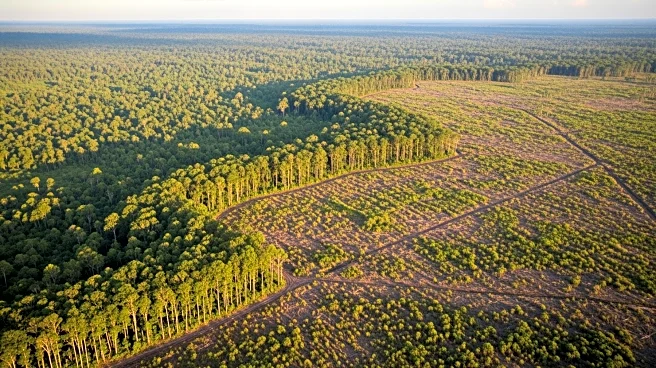
The Indonesian government has announced the reclamation of over 4 million hectares of land previously used for plantations, mining, and other activities within designated forest areas. This initiative is part of a comprehensive crackdown on illegal activities in forest regions,
led by a task force established by President Prabowo Subianto. The task force, which includes military, police, and various ministries, has exceeded its initial target of seizing 1 million hectares by 400% within its first year. The reclaimed lands primarily consist of oil palm plantations and mining concessions, including nickel and coal. The government has collected approximately 2.3 trillion rupiah ($136 million) in fines from 20 oil palm companies and one nickel mining company. However, the future use of the seized lands and the collected fines remains unclear, raising questions about the transparency and data supporting the campaign.
Why It's Important?
This large-scale land reclamation effort highlights Indonesia's commitment to enforcing environmental laws and combating illegal land use. The initiative could significantly impact the country's palm oil industry, as it suggests that a substantial portion of oil palm plantations may be operating illegally. This could lead to increased scrutiny and regulation of the industry, affecting both domestic and international stakeholders. The lack of clarity regarding the future use of reclaimed lands and the funds collected from fines poses challenges for transparency and accountability. Additionally, the potential for conflicts with local communities and the need for ecological restoration are critical issues that could influence the success and sustainability of the initiative.
What's Next?
The Indonesian government faces the challenge of determining the future management of the reclaimed lands. Decisions on post-seizure management, permits, and land use are yet to be clarified, which could lead to potential conflicts with local communities and stakeholders. The government must also address the need for ecological restoration to mitigate environmental damage caused by illegal land use. Transparency and involvement of civil society in these processes are essential to ensure that the initiative delivers justice and does not merely redistribute power among elites. The task force's ongoing operations and the government's response to these challenges will be crucial in shaping the future of Indonesia's forest governance.
Beyond the Headlines
The crackdown on illegal land use in Indonesia raises broader questions about the balance between economic development and environmental conservation. The initiative underscores the importance of transparent governance and the need for comprehensive data to support enforcement actions. The potential for new conflicts with local communities highlights the importance of respecting indigenous rights and ensuring that land management decisions are made with free, prior, and informed consent. The focus on administrative fines and land seizures, rather than ecological restoration, suggests a need for a more holistic approach to forest management that prioritizes environmental sustainability alongside economic interests.