


What's Happening?
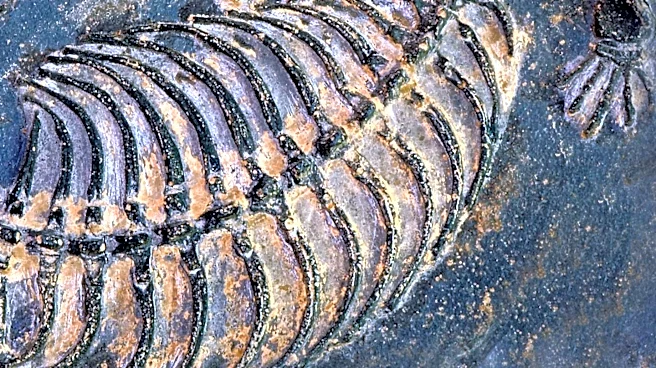
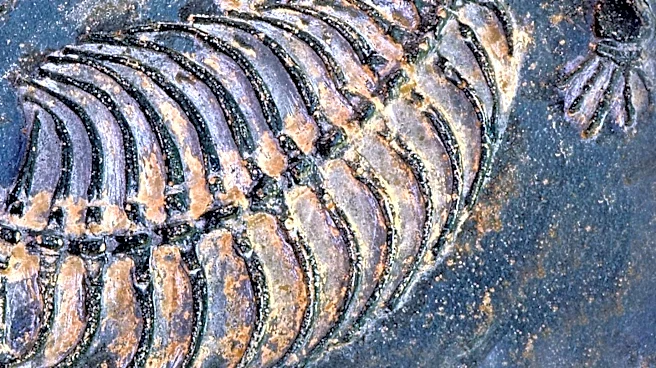
Recent fossil discoveries in Fukushima, Japan, have provided new insights into the diversity of iguanodontians, a group of herbivorous dinosaurs. A fossil found in 1999 at the Iwaki City Ammonite Center has been identified as the right sternal plate of an indeterminate
styracosternan, a type of iguanodontian. This specimen, estimated to be from a dinosaur about 3 meters in length, suggests that iguanodontians of varying sizes inhabited the coastal environments of East Asia during the Late Cretaceous period. The findings, published in Paleontological Research, highlight the presence of both large and small iguanodontians in the region, contributing to the understanding of their evolution and biogeography.
Why It's Important?
The discovery of diverse iguanodontian fossils in Fukushima is significant for paleontologists studying dinosaur evolution and distribution. It provides evidence of the varied ecological niches these dinosaurs occupied, particularly in coastal environments. This finding enhances the understanding of how iguanodontians adapted to different habitats and their role in ancient ecosystems. The research also underscores the importance of Japan's fossil record in contributing to global knowledge about dinosaur diversity and distribution patterns during the Cretaceous period.