


What's Happening?
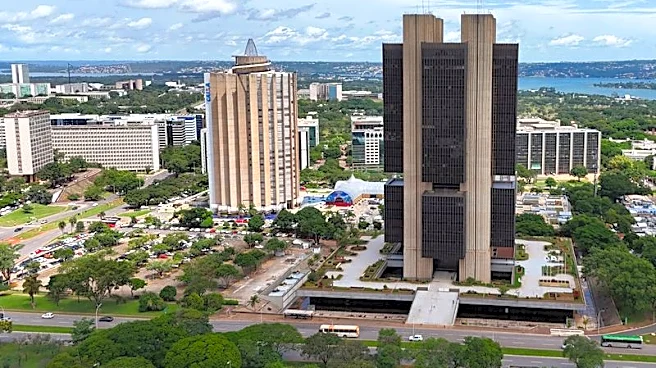
Brazil's central bank has reduced its benchmark interest rate for the fourth consecutive time, lowering it from 14.25% to 14%. This decision comes as part of a cycle that began in March, aimed at stimulating the economy ahead of the presidential elections.
Despite easing inflation, which slowed to 4.64% in June, it remains above the target range of 1.5% to 4.5%. The central bank's cautious approach is influenced by global economic uncertainties, including the US-Israel conflict with Iran, which has driven up oil prices.
Why It's Important?
The interest rate cut is a strategic move to boost Brazil's economy, which has been struggling with high inflation and economic stagnation. Lowering the rate is intended to encourage borrowing and investment, potentially leading to economic growth. However, the global economic environment, particularly rising oil prices, poses challenges to this strategy. The decision also reflects the political landscape, as President Lula seeks to secure another term by demonstrating economic progress.
What's Next?
As Brazil approaches its presidential elections, the central bank's monetary policy will be closely watched. Further rate adjustments may depend on inflation trends and global economic conditions. The outcome of the elections could also influence future economic policies, impacting Brazil's long-term economic trajectory.