







What's Happening?
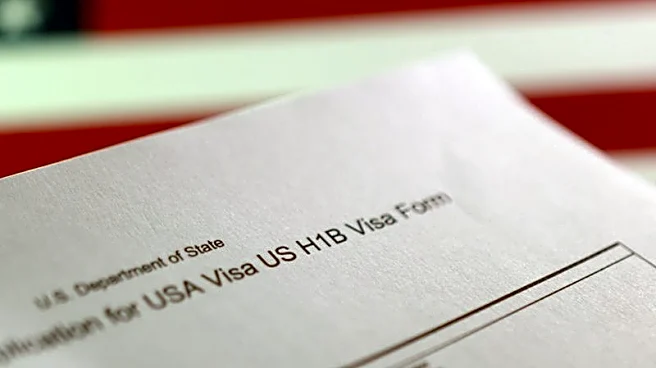
A federal judge in Massachusetts has blocked the Trump administration's imposition of a $100,000 fee on H-1B visa applications. The ruling came from Judge Leo T. Sorokin of the U.S. District Court for the District of Massachusetts, who sided with 20 states
challenging the fee increase. The court granted the states' motion for summary judgment, vacating the policy entirely. The H-1B program allows U.S. employers to hire foreign workers in specialty occupations, typically requiring a bachelor's degree or equivalent. The fee increase was intended to curb abuse and protect American workers, but the court found it to be an unauthorized tax. The decision highlights the growing judicial scrutiny over the separation of powers, particularly regarding the executive branch's authority to impose taxes.
Why It's Important?
The ruling has significant implications for U.S. immigration policy and the separation of powers between Congress and the executive branch. By framing the fee as a tax, the court emphasized that only Congress has the constitutional authority to impose taxes. This decision could set a precedent for future cases where the executive branch attempts to impose financial burdens without explicit congressional approval. The outcome affects employers, universities, hospitals, and foreign workers who rely on the H-1B program. It also underscores the judiciary's role in checking executive overreach, particularly in areas where financial implications are involved.
What's Next?
An appeal is expected, with the administration likely to argue that the fee is a permissible condition of entry rather than a tax. The case may reach the Supreme Court, where the justices will need to determine whether the President's broad immigration authority includes the power to impose such a financial requirement. The decision could influence how future administrations approach immigration policy and the extent to which they can impose financial conditions without congressional approval.