








What's Happening?
Reno-Tahoe swim instructor Lynnette Bellin was attacked by a wild otter near Hidden Beach at Lake Tahoe. The incident occurred early Sunday morning during an open-water swim. Bellin initially believed she was being pulled underwater by a human due to the
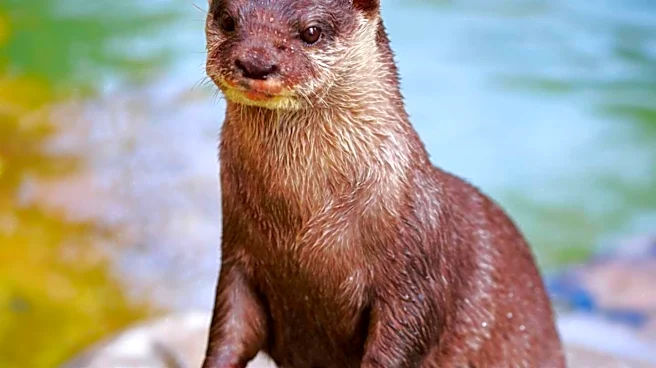
force of the attack, but then identified the assailant as an otter. She sustained severe injuries, requiring 38 stitches, including 22 in her foot, along with numerous scratches and bruises on her arms and legs. Bellin also underwent rabies treatment, which involved multiple injections into her deepest wounds. The Nevada Department of Wildlife (NDOW), Incline Village Fire Department, and Washoe County Sheriff’s Office responded to the scene. NDOW public information officer Kenzie Margiott noted that the North American river otter population has increased in the area over the last 15 years, extending into the Carson River. While such encounters are rare, otters can become territorial. Officials were unable to capture the otter involved in the attack.
Why It's Important?
This incident highlights the increasing frequency of human-wildlife interactions in recreational areas, particularly as wildlife populations expand into previously less-inhabited zones. The attack underscores potential public health risks, as otters can carry diseases like rabies, necessitating immediate medical intervention for victims. For local authorities and park services, it emphasizes the need for enhanced public awareness campaigns regarding wildlife safety and the importance of not approaching or interacting with wild animals. The event could impact tourism and recreational activities in Lake Tahoe, prompting visitors to exercise greater caution. For residents and frequent users of the lake, it serves as a stark reminder of the inherent dangers of sharing natural spaces with wildlife, even seemingly docile creatures. The inability to capture the otter also means a continued potential risk to other lake users, raising concerns about public safety in popular natural attractions.
What's Next?
Nevada State Parks, in collaboration with the Nevada Department of Wildlife, will be alerting visitors about the otter attack and advising caution around wildlife in the Lake Tahoe basin. Officials are urging people to avoid approaching or interacting with otters and to leave them undisturbed if sighted. Lynnette Bellin, despite her injuries, has stated that the attack will not deter her from enjoying the lake, but she encourages others to be mindful of wildlife. This incident may lead to increased signage or public service announcements in the area to educate visitors on safe practices around wild animals. Authorities will likely continue to monitor otter activity in the region, though capturing the specific animal responsible for the attack remains a challenge. The focus will be on prevention through public education and awareness to minimize future human-wildlife conflicts.
Beyond the Headlines
The otter attack at Lake Tahoe brings to light broader ecological and behavioral shifts in wildlife. The reported increase in the North American river otter population in the area suggests a successful conservation effort or adaptation to changing environmental conditions, which, while positive for biodiversity, can lead to more frequent human-wildlife encounters. This incident also raises questions about the balance between human recreation and wildlife preservation in shared natural habitats. It challenges the perception of certain wildlife as harmless, reminding the public that all wild animals can be unpredictable and potentially dangerous, especially when territorial or threatened. The need for rabies treatment after such an encounter also highlights the often-overlooked health risks associated with wildlife interactions, prompting a re-evaluation of public health protocols in areas with growing wildlife populations. This event serves as a case study for managing human presence in increasingly wild environments.