







What's Happening?
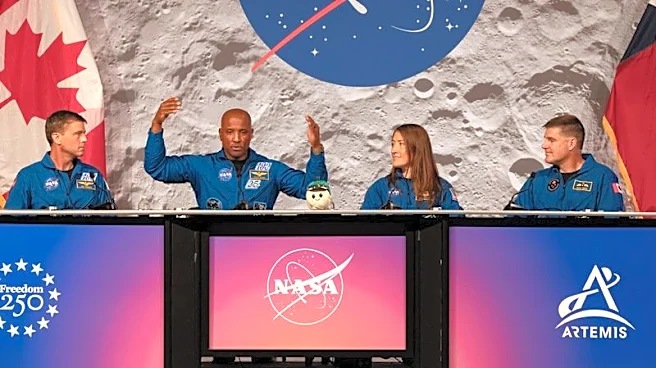
NASA's Artemis II mission has successfully returned from its journey around the moon, with astronauts Christina Koch, Reid Wiseman, Victor Glover, and Jeremy Hansen splashing down in the Pacific Ocean. The mission marks a significant milestone in NASA's efforts
to explore lunar space and prepare for future missions. The astronauts' return was celebrated as a testament to human ingenuity and the potential for further space exploration. The mission involved extensive scientific research and technological advancements, contributing to NASA's long-term goals for lunar exploration.
Why It's Important?
The successful completion of the Artemis II mission underscores NASA's commitment to advancing space exploration and scientific discovery. It highlights the importance of international collaboration and the role of astronauts in achieving complex missions. The mission's success can inspire future generations of scientists and engineers, fostering interest in STEM fields. It also contributes to the broader goals of understanding lunar environments and preparing for potential human settlement on the moon.
Beyond the Headlines
The mission's achievements reflect the ongoing evolution of space exploration technology and the potential for new discoveries. It raises questions about the ethical and logistical considerations of future lunar missions, including resource management and environmental impact. The mission may influence policy decisions regarding space exploration funding and international cooperation, shaping the future of space travel and research.