






What's Happening?
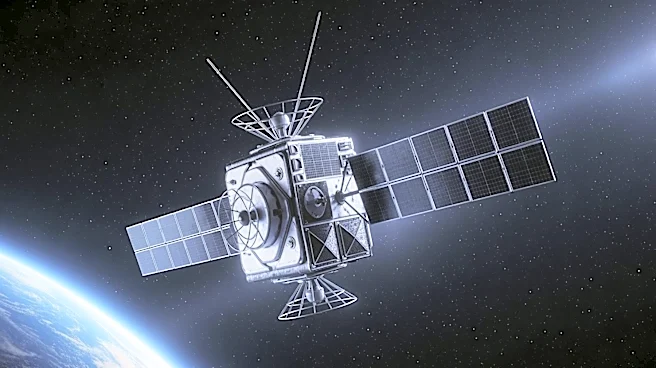
GPS satellites are equipped with atomic clocks that are deliberately set to run slow before launch to account for relativistic effects once in orbit. This adjustment is necessary because, according to Einstein's theory of relativity, clocks on satellites run faster
than those on the ground due to their high speed and weaker gravitational field. The net result of these effects is a gain of about 38 microseconds per day, which, if uncorrected, would lead to significant navigation errors. Engineers set the satellite clocks to a slightly lower frequency on the ground so that they operate correctly in space, ensuring accurate timing and positioning.
Why It's Important?
The precision of GPS technology is crucial for a wide range of applications, from navigation in smartphones and vehicles to military operations and scientific research. The ability to correct for relativistic effects ensures that GPS systems provide accurate location data, which is essential for the functioning of modern society. Without these corrections, navigation errors would accumulate rapidly, leading to significant inaccuracies. This demonstrates the practical application of theoretical physics in everyday technology and highlights the importance of precise engineering in maintaining the reliability of global positioning systems.
What's Next?
As technology advances, further improvements in GPS accuracy and reliability are expected. Continued research and development may lead to enhancements in satellite technology and clock precision, potentially reducing the need for such extensive corrections. Additionally, the integration of new technologies, such as quantum clocks, could further revolutionize the field, offering even greater accuracy and stability. The ongoing evolution of GPS technology will likely continue to support a wide array of industries and applications, reinforcing its role as a critical component of global infrastructure.
Beyond the Headlines
The reliance on GPS technology underscores the interconnectedness of modern technological systems and the importance of international cooperation in maintaining and advancing these systems. The successful integration of complex scientific principles into practical applications also highlights the value of interdisciplinary collaboration between physicists, engineers, and technologists. As GPS technology continues to evolve, it may also raise questions about data privacy and security, given its pervasive use in tracking and navigation.