


What's Happening?
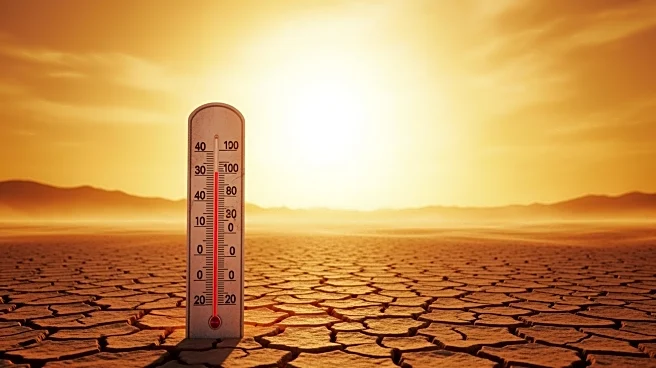
A recent study conducted by researchers at the University of Colorado Boulder suggests that tropical land regions may experience significantly higher temperature increases compared to oceans as climate change progresses. The study, published in the Proceedings
of the National Academy of Sciences, utilized sediment cores from the Colombian Andes to analyze historical climate patterns. The findings indicate that during the Pliocene epoch, when carbon dioxide levels were similar to today's, tropical land temperatures increased nearly twice as much as ocean temperatures. This research highlights the potential for dramatic warming in tropical regions, which are home to approximately 40% of the global population.
Why It's Important?
The implications of this study are significant for understanding regional climate change impacts. Tropical regions, already experiencing high temperatures, could face conditions beyond what is tolerable for both human populations and ecosystems. This could lead to increased stress on resources and necessitate adaptation strategies for communities with limited means. The study underscores the importance of focusing on regional climate changes to better prepare for future challenges. As El Niño events become more frequent due to climate change, the northern Andes could experience further warming and drought, exacerbating existing vulnerabilities.
What's Next?
The study calls for increased attention to tropical regions in climate research, as these areas are often overlooked compared to polar regions. Researchers emphasize the need for more localized climate models to predict future conditions accurately. This could aid in developing targeted adaptation strategies to build resilience in tropical communities. Additionally, the study suggests that understanding feedback mechanisms in nature is crucial, as crossing certain thresholds could trigger cascading events that amplify climate changes.
Beyond the Headlines
The research highlights a gap in climate science, where tropical regions receive less focus due to the location of major research institutions in higher latitude areas. This oversight could lead to inadequate preparation for climate impacts in regions with high population densities and limited resources. The study advocates for a shift in focus to ensure that climate change models account for regional variations, which are critical for effective policy-making and resource allocation.