
What's Happening?
In the wake of the Arab Spring, Morocco's Islamist groups have struggled to present a viable governing agenda, instead focusing on delegitimizing the state. They have formed alliances with NGOs and European
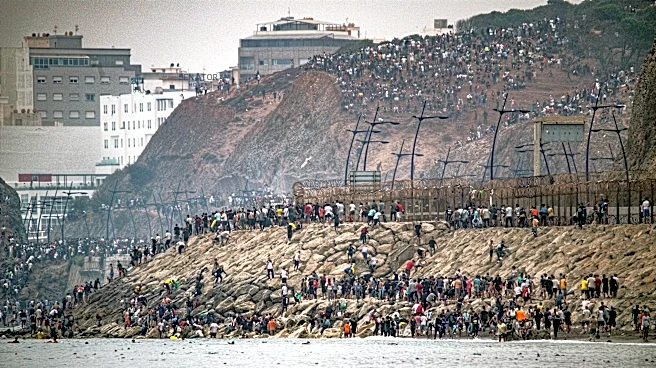
activist networks, portraying Morocco's ties with Israel and the United States as conspiratorial. This narrative aims to deepen public disillusionment and convert resentment into electoral support. Despite these efforts, Morocco has made significant strides in infrastructure and economic development, including advancements in high-speed rail, port expansion, and aerospace. However, Islamist rhetoric continues to paint Morocco as a failed state, urging young Moroccans toward jihad and confrontation with the West. The narrative also falsely claims Morocco seeks to reclaim Ceuta and Melilla, despite no official government stance supporting this.
Why It's Important?
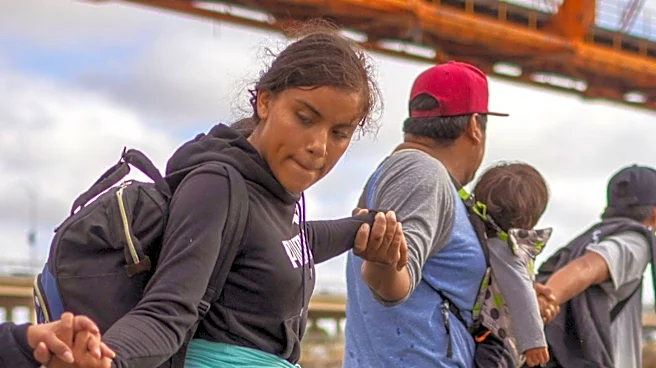
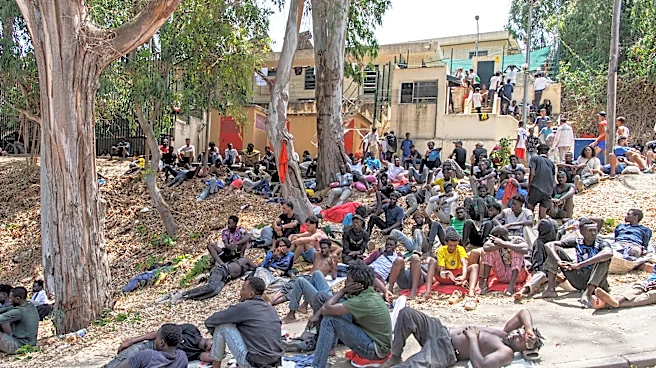
The Islamist narrative in Morocco has significant implications for the country's political stability and international relations. By undermining state legitimacy, these groups aim to weaken public trust and encourage illegal migration. This rhetoric not only affects Morocco's internal politics but also its relationships with European countries and the United States. The portrayal of Morocco as a 'Zionist proxy' further complicates its diplomatic stance, especially regarding its position on Gaza and relations with Israel. The ongoing political tension could impact Morocco's economic growth and its ability to attract foreign investment, crucial for its development projects.
What's Next?
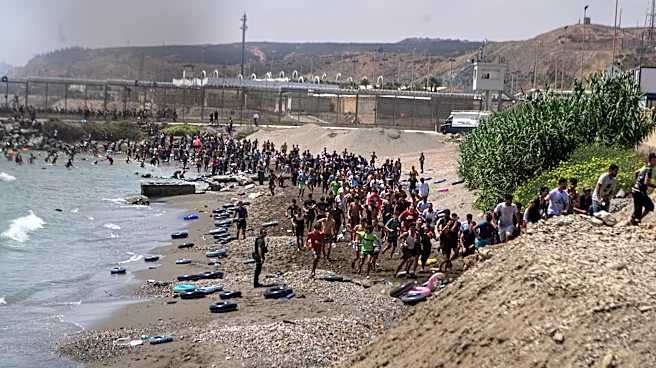
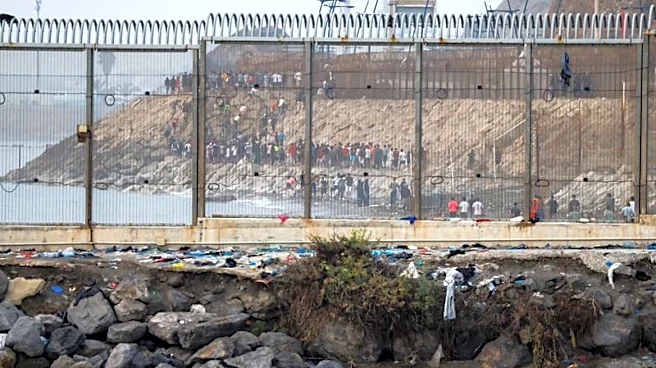
As Morocco approaches its general elections, the political landscape is likely to become more contentious. Islamist groups may intensify their efforts to destabilize the incumbent government through social media campaigns and border chaos. The potential rise of figures like Fouzi Lekjaa, who has gained prominence through his role in Moroccan football, could shift the political dynamics. Additionally, Morocco's cooperation with European countries on migration issues will be crucial in managing border security and maintaining diplomatic relations. The outcome of the elections and the government's response to Islamist narratives will shape Morocco's future political and economic trajectory.
Beyond the Headlines
The ideological battle in Morocco highlights broader issues of identity and governance in the region. The tension between Islamist narratives and state policies reflects a struggle over Morocco's cultural and political direction. The emphasis on infrastructure and economic development by the Moroccan government contrasts with the Islamist focus on ideological mobilization. This dichotomy raises questions about the role of religion in politics and the future of secular governance in Morocco. The situation also underscores the challenges faced by developing countries in balancing modernization with traditional values.