

What's Happening?
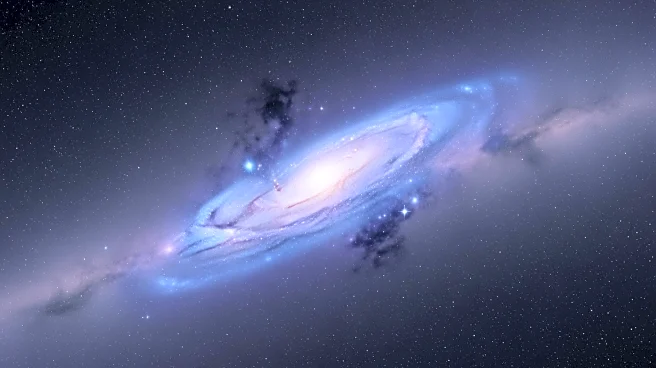
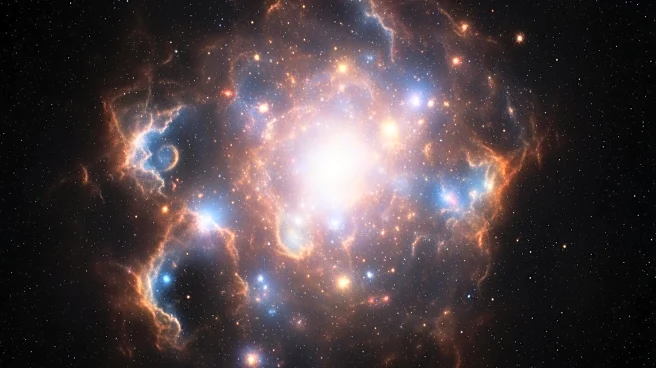
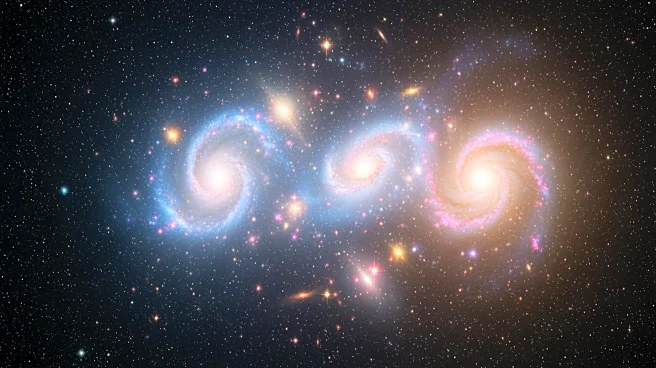
Astronomers have utilized the James Webb Space Telescope and the Atacama Large Millimeter/sub-millimeter Array to study 70 dusty, star-forming galaxies at the edge of the universe. These galaxies, observed as they were less than a billion years after
the Big Bang, are rich in metals, which contradicts current models of cosmic evolution. The presence of these elements suggests that star formation began earlier than previously thought. The research, led by Jorge Zavala from the University of Massachusetts Amherst, indicates that these galaxies are part of a lifecycle that includes ultrabright young galaxies and older, quiescent ones. This discovery implies that the current understanding of galactic evolution may need revision.
Why It's Important?
The findings have significant implications for the field of astronomy, as they challenge existing theories about the timeline of star and galaxy formation. If these galaxies are indeed connected to other known types, it suggests that the processes leading to the formation of stars and galaxies began much earlier than current models predict. This could lead to a reevaluation of the history of the universe and the mechanisms behind cosmic evolution. The discovery also highlights the capabilities of modern telescopes like the JWST and ALMA in uncovering new aspects of the universe, potentially leading to further groundbreaking discoveries.
What's Next?
Further research is needed to explore the connections between these newly discovered galaxies and other known types. Scientists will likely conduct more detailed observations to understand the processes that led to the early formation of metals and stars. This could involve using other advanced telescopes and instruments to gather more data. The findings may also prompt theoretical physicists to develop new models of cosmic evolution that account for these early star-forming activities.