





What's Happening?
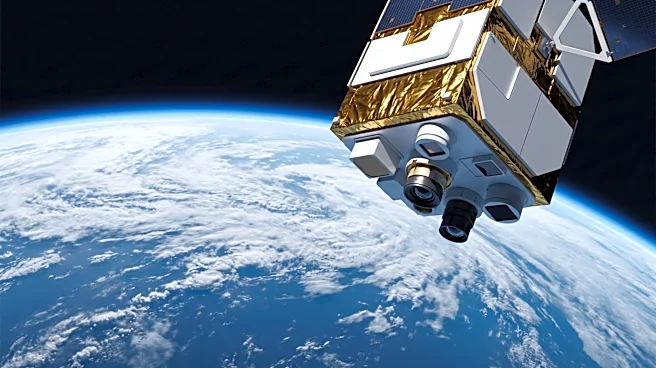
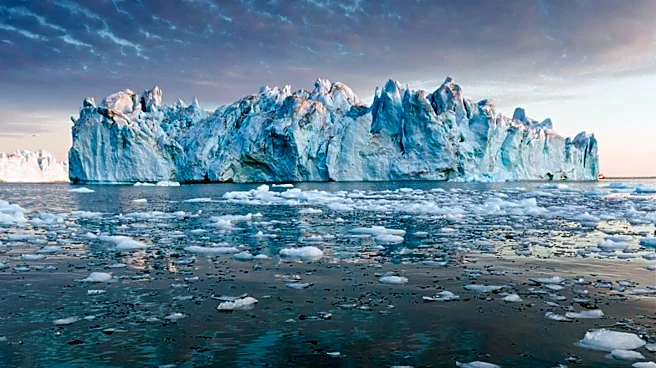
A new NASA-led study indicates that the Arctic sea ice melt season, which had been progressively lengthening for decades, has shown a relatively stable average duration since approximately 2010. While the melt season is currently about 40 days longer
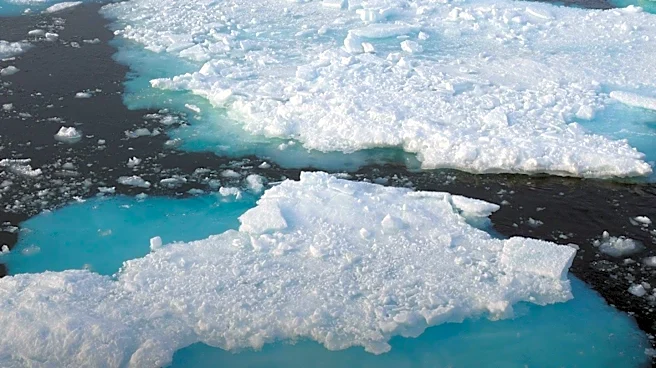
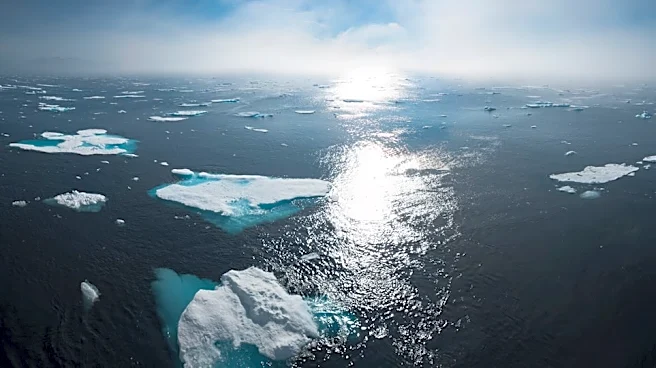
than in 1979, most of this increase occurred before 2010. The research, which analyzed satellite observations from 1979 through 2023, found that the longer melt season was primarily driven by later autumn freeze-ups rather than significantly earlier spring melting. Linette Boisvert, an ice scientist at NASA's Goddard Space Flight Center and co-author of the study, noted that the remaining sea ice is now thinner and more variable, making it more susceptible to short-term atmospheric changes. Shifts in cloud patterns since 2010 have reduced sunlight reaching parts of the Arctic Ocean, contributing to the stabilization of the average melt season length.
Why It's Important?
This stabilization in the Arctic melt season, despite the region warming nearly four times faster than the global average, highlights a potential shift in the dynamics of Arctic climate change. The increased sensitivity of thinner ice to atmospheric conditions means that yearly weather patterns are now playing a more significant role in determining the melt season's length. This could influence climate models and predictions for future Arctic conditions, impacting global weather systems, sea levels, and marine ecosystems. While the rapid decline in sea ice thickness and extent observed in the 2000s has paused, the underlying vulnerability of the thinner ice cover remains a critical concern. Understanding these new dynamics is crucial for policymakers and scientists to develop more accurate climate projections and adaptation strategies.
What's Next?
Researchers caution that the current leveling off of the melt season may be temporary. If the remaining thick Arctic sea ice, particularly north of Greenland and around the Canadian Arctic Archipelago, continues to thin, the Arctic could enter another phase of rapid sea ice decline, potentially leading to a renewed lengthening of the melt season. Continued satellite monitoring of Arctic sea ice and its energy balance is essential to track these changes and understand whether the recent stabilization represents a lasting shift or merely a pause before further rapid transformation. Future research will likely focus on refining climate models to incorporate the increased influence of atmospheric effects on thinner ice and assessing the long-term implications of these altered dynamics for the global climate.
Beyond the Headlines
The study's findings underscore the complex and non-linear nature of climate change, where trends can shift and new factors can emerge to influence environmental processes. The increased variability and sensitivity of the Arctic ice to atmospheric conditions suggest that the region is entering a new phase, potentially characterized by more unpredictable short-term changes. This complexity challenges simplistic narratives of continuous, linear decline and emphasizes the need for nuanced scientific understanding. The implications extend beyond environmental science, affecting indigenous communities reliant on sea ice, shipping routes, and geopolitical interests in the Arctic. The ongoing changes highlight the interconnectedness of global climate systems and the potential for regional shifts to have far-reaching consequences.