





What's Happening?
Farmers in Manitoba, Canada, are grappling with the increasing unpredictability of weather patterns, experiencing both severe floods and droughts in recent years. Nick Matheson, a sixth-generation grain and cattle farmer in the Stonewall area, faced a devastating
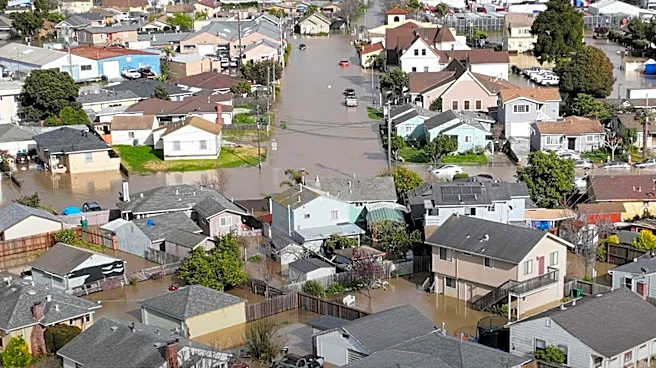
deluge of rain in spring 2026, resulting in 300 acres of his cropland being destroyed by flooding and his cattle herd suffering from insects and hoof rot due to muddy conditions. The Manitoba Agricultural Services Corporation (MASC) has paid out $11 million for 478 excess moisture claims on approximately 157,000 acres too wet to seed this year, and received 790 crop damage claims across 180,000 acres. This follows a record $570 million in indemnities paid out by MASC in 2021 due to extreme drought. While some farmers are adopting regenerative agricultural techniques to adapt, others, like Matheson, feel limited in their ability to plan for such extreme and localized natural disasters. The agricultural sector in Manitoba is divided on the best approach to prepare for these events, with some seeing potential benefits from warmer temperatures and longer growing seasons, while acknowledging the increased risks.
Why It's Important?
The challenges faced by Manitoba farmers highlight the broader economic and societal impacts of climate change on the agricultural sector. The significant financial losses incurred by farmers, as evidenced by the millions paid out in insurance claims, underscore the vulnerability of food production to extreme weather. This situation can lead to increased food prices, reduced agricultural output, and economic instability for farming communities. The debate among farmers regarding adaptation strategies versus the perceived benefits of a changing climate reflects a critical juncture in agricultural policy and practice. The reliance on insurance to 'keep the wolves at bay' suggests that current mitigation efforts may be insufficient to address the scale of the problem. Furthermore, the environmental impact of industrial farming practices, such as farming up to the water's edge, exacerbates the damage from floods, indicating a need for more sustainable land management to build resilience against future climate shocks.
What's Next?
In response to the escalating challenges, organizations like the Manitoba Forage & Grassland Association are developing climate forecasting tools, such as Aquanty, to help producers understand and manage the impacts of extreme weather on groundwater supplies. This initiative, which has expanded to other Canadian provinces with federal funding, aims to promote management tools like rotational grazing. Watershed districts in Manitoba, such as the Swan Lake Watershed District, are seeing a surge in applications for stream-bank stabilization projects, indicating a growing recognition among farmers of the need for preventative measures. However, the financial pressures of industrial farming often make it difficult for producers to implement these changes. Future efforts will likely focus on incentivizing sustainable practices, such as rotational grazing and nitrogen management, through programs like the Prairie Watersheds Climate Program, to reduce greenhouse gas emissions and improve soil health, while farmers continue to adapt to an increasingly unpredictable climate.
Beyond the Headlines
The experiences of Manitoba farmers reveal a deeper tension between short-term economic pressures and long-term environmental sustainability in agriculture. The sentiment expressed by some farmers, who see potential economic benefits from a warming climate despite the risks, underscores the complex decision-making processes at play. This perspective highlights the need for comprehensive policies that not only address immediate disaster relief but also foster a paradigm shift towards climate-resilient farming practices. The reliance on diesel-powered machinery and the lack of viable electric alternatives for large-scale farming operations also point to systemic challenges in decarbonizing the agricultural sector. Ultimately, the ongoing struggle of farmers to adapt to extreme weather events raises fundamental questions about food security, land stewardship, and the economic viability of traditional farming in a rapidly changing global climate.