



What's Happening?
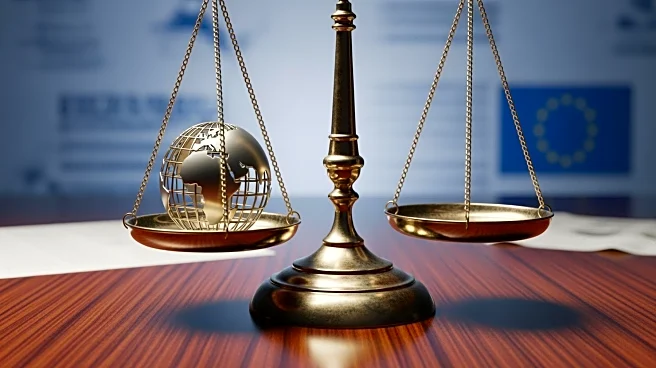
The European Union has approved a legal mechanism to maintain the freeze on Russian state assets, amounting to €210 billion, until Russia ceases its aggression against Ukraine and provides reparations. This decision, backed by EU ambassadors, aims to prevent
pro-Kremlin countries like Hungary and Slovakia from unilaterally unfreezing these assets. The legal change allows the EU to bypass the need for unanimous reauthorization of sanctions every six months, thereby reducing the influence of Kremlin-friendly nations within the bloc.
Why It's Important?
This legal maneuver by the EU represents a significant shift in its approach to sanctions, potentially setting a precedent for future economic measures against aggressive states. By sidelining countries that might oppose the sanctions, the EU strengthens its collective stance against Russia's actions in Ukraine. This move could have far-reaching implications for EU-Russia relations and the geopolitical landscape in Europe. It also underscores the EU's commitment to supporting Ukraine and maintaining pressure on Russia to end its military aggression.
What's Next?
The EU's decision may lead to increased tensions with Russia, as the Kremlin's hopes of negotiating a peace settlement involving the unfreezing of assets are diminished. The legal change could also prompt Russia to seek alternative strategies to counteract the economic impact of the sanctions. Within the EU, this development may lead to further discussions on the bloc's foreign policy and its ability to act decisively in the face of internal dissent. The situation will likely be closely monitored by international observers and could influence future EU policy decisions.