



What's Happening?
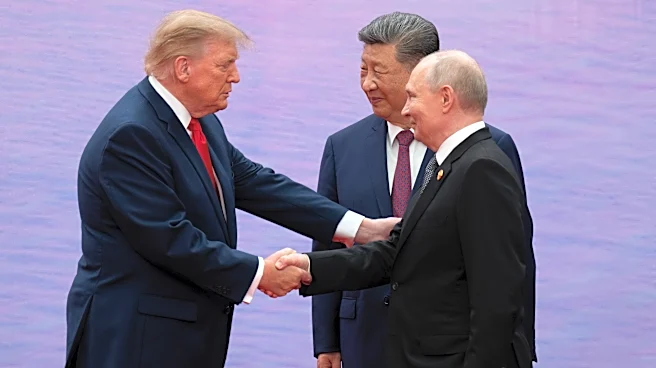
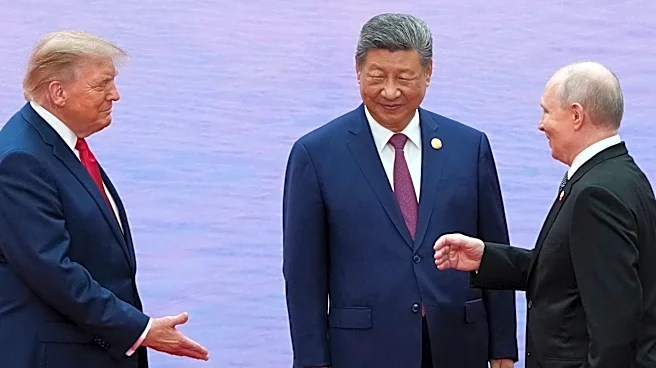
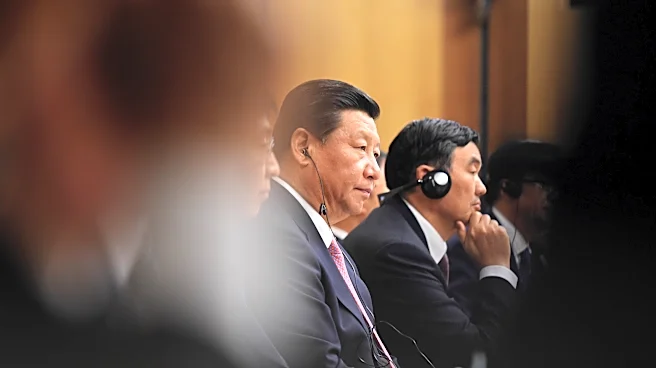
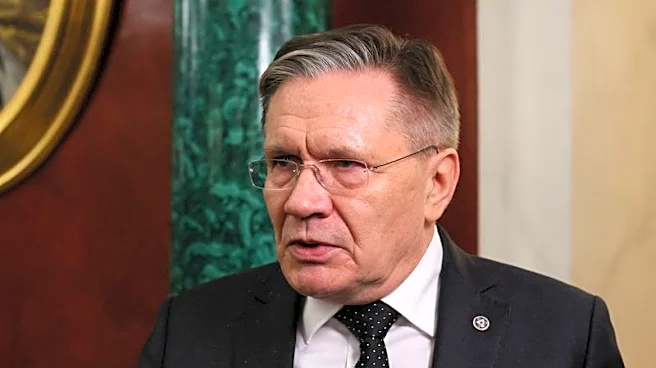
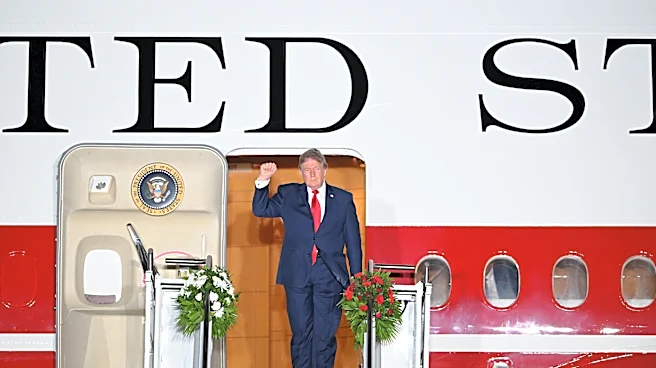
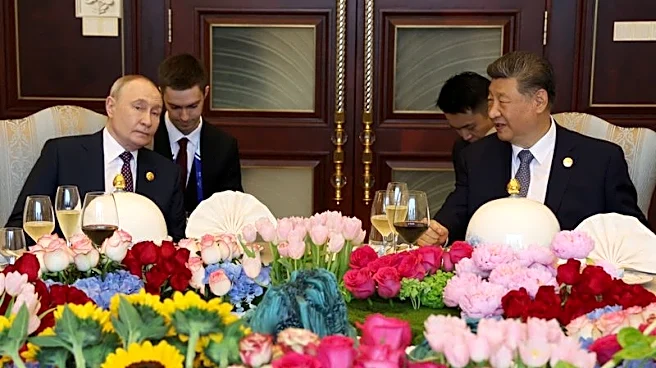
The heads of state from China, Russia, and the United States are convening in Shenzhen for an unprecedented trilateral meeting. This summit aims to address critical global issues, including safeguarding the post-World War II international order, preserving
global strategic stability, and advancing global energy security. The meeting is seen as a significant step towards major-country coordination in a multipolar world, emphasizing common security and peaceful coexistence rather than the division of spheres of influence. Discussions are expected to cover topics such as nuclear arms control, crisis management, and energy exports. The ongoing Ukraine crisis and renewed hostilities in the Middle East have underscored the urgency of stable energy supplies, a shared interest among the three nations. China is hosting the dialogue, reflecting its evolving role as a builder of international dialogue platforms.
Why It's Important?
This trilateral summit holds significant importance for global stability and U.S. interests. The participation of the U.S. alongside China and Russia in such a high-level forum signals a potential shift towards more direct engagement on complex international challenges. For the U.S., this meeting offers an opportunity to address critical issues like strategic stability and energy security directly with two major global powers, potentially mitigating risks of escalation in various geopolitical hotspots. Stabilizing global energy markets, a key agenda item, directly impacts U.S. economic stability and consumer prices. Furthermore, the dialogue framework could help restore military communication channels and clarify red lines, reducing the risk of misinterpretation and unintended conflict, which is crucial for U.S. national security.
What's Next?
The immediate next steps following the Shenzhen summit will likely involve working-level talks to translate the discussions into concrete actions and follow-on negotiations. The long-term impact of this meeting will depend on whether the three nations can establish a shared assessment of global risks and integrate these into future agendas. If the issues raised lead to sustained major-power coordination rather than a one-off encounter, it could significantly influence global governance. For Russia, this framework provides a direct channel to articulate its positions on critical issues, potentially expanding its diplomatic space. The U.S. will likely monitor the outcomes closely to assess the effectiveness of this trilateral approach in managing global risks and fostering greater certainty in international relations.
Beyond the Headlines
Beyond the immediate policy discussions, this trilateral summit highlights a deeper shift in international diplomacy. China's role as a host and facilitator of such a high-stakes meeting underscores its growing influence in shaping global dialogue platforms, moving beyond its traditional role as a participant in the existing international order. This development could signal a future where multilateralism takes on new forms, with non-traditional alliances and dialogue structures emerging to address complex global challenges. The summit also implicitly acknowledges the interconnectedness of global interests, where major-power confrontation would trigger far-reaching spillover effects. This recognition could foster a more collaborative approach to global issues, potentially leading to new norms for managing emerging risks like AI integration into nuclear command systems and promoting a more stable, multipolar world order.