







What's Happening?
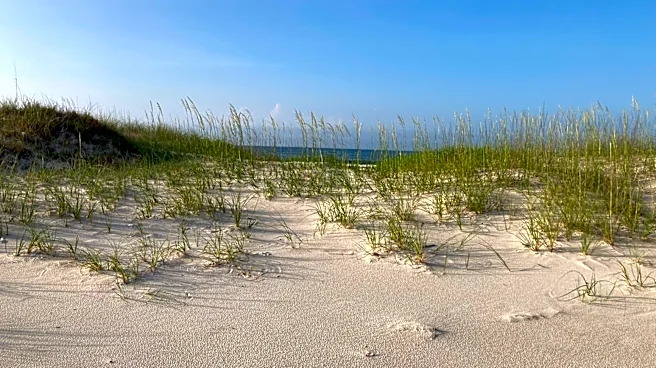
A significant dredging project is currently underway in Buffalo's Outer Harbor, specifically at Slip 3 at Wilkeson Pointe, with the goal of transforming it into a wetland habitat for local fish and birds. This initiative is being led by the U.S. Army
Corps of Engineers. The project involves raising the depth of the slip to facilitate plant growth, using 80,000 cubic yards of sediment sourced directly from the Buffalo River. This approach not only creates a new ecosystem but also addresses the challenge of disposing of dredged material from the navigational channel. The sediment, which can sometimes contain toxic materials from boat flaking, is carefully tested by the EPA to ensure safety before being placed in the slip, where plants will eventually filter it. The project aims to improve the area for natural species and maintain a healthy ecosystem in the Buffalo River and harbor.
Why It's Important?
This project holds significant environmental and economic importance for Buffalo and the Great Lakes region. Environmentally, it represents a proactive step in ecological restoration, converting an abandoned industrial slip into a thriving wetland habitat. This will enhance biodiversity, support local fish and bird populations, and contribute to the overall health of the Great Lakes ecosystem. Economically, the project demonstrates an innovative approach to waste management by utilizing locally sourced dredged material, which saves costs associated with transporting it to distant disposal sites. Furthermore, by improving the ecosystem, it can indirectly support local tourism and recreational activities, such as kayaking, which is expected to resume in the area. The project also highlights the collaborative efforts between federal agencies like the U.S. Army Corps of Engineers and local environmental initiatives.
What's Next?
The U.S. Army Corps of Engineers anticipates reopening Slip 3 for kayaking by mid-September. The overall project is slated for completion by 2035. Over the coming years, the focus will be on monitoring the growth of plants in the newly deepened slip and observing the return and establishment of fish and bird populations. Continued environmental assessments will be crucial to ensure the long-term success and ecological integrity of the wetland habitat. The project's progress will likely be tracked by local environmental groups and government agencies, with potential for further phases of restoration or similar projects in other areas of the harbor. Public engagement and educational initiatives may also be developed to inform residents about the ecological benefits and recreational opportunities of the transformed area.
Beyond the Headlines
This dredging project in Buffalo's Outer Harbor exemplifies a broader trend in urban environmental planning: the repurposing of industrial infrastructure for ecological benefit. It showcases how areas once dominated by human industry can be reclaimed and revitalized to support natural ecosystems. The project's innovative use of contaminated sediment from the Buffalo River, rather than transporting it elsewhere, highlights a sustainable approach to environmental management that minimizes ecological footprint and maximizes resource efficiency. This initiative could serve as a model for other post-industrial cities looking to address environmental degradation and enhance urban biodiversity. It also underscores the long-term commitment required for ecological restoration, with a completion timeline extending over a decade, emphasizing the patience and sustained effort needed to achieve significant environmental transformation.