




What's Happening?
The Asia-Pacific Economic Cooperation (APEC) has identified four key policy areas to enhance regional economic resilience amidst rising energy prices, geopolitical fragmentation, and tighter financial conditions. These priorities include maintaining macroeconomic
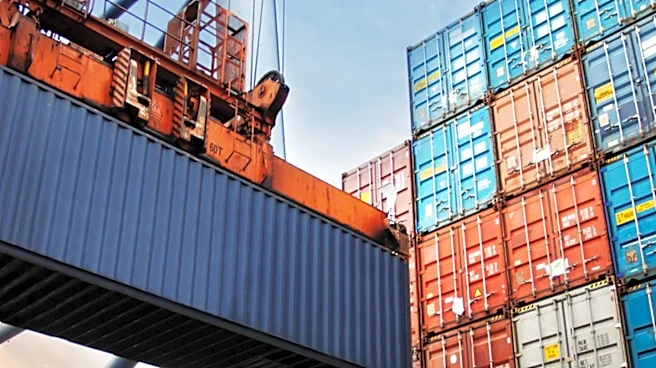
stability through agile monetary and fiscal policies, diversifying investments and energy sources, strengthening the trading environment by expanding partners and securing alternative supply routes, and fortifying multilateral linkages to sustain dialogue. APEC emphasizes that while technology-driven investments offer growth potential, their benefits are not automatic. The region's economic growth is projected to reach 3.4% in 2026, but is expected to moderate to 3.1% in 2027 due to mounting economic headwinds.
Why It's Important?
APEC's focus on strengthening economic resilience is crucial for maintaining stability and prosperity in a volatile global environment. For the U.S. and its economic partners in the Asia-Pacific, these priorities address critical challenges such as supply chain vulnerabilities, energy security, and trade protectionism. Diversifying energy sources and trade partners can reduce reliance on single markets and mitigate the impact of geopolitical tensions. The call for multilateral cooperation is vital for preserving open markets and addressing shared challenges, which directly benefits U.S. businesses engaged in international trade and investment. Failure to implement these measures could lead to increased economic instability, higher costs for consumers and businesses, and a fragmentation of global trade, impacting U.S. economic interests and strategic alliances.
What's Next?
APEC economies are urged to implement these policy recommendations to navigate near-term uncertainties and build a foundation for shared prosperity. This includes prioritizing fiscal consolidation while providing targeted support, expanding investments beyond new technologies to diversify growth drivers, and minimizing trade restrictions to keep markets open and predictable. The continued emphasis on multilateral dialogue through platforms like APEC will be essential for fostering cooperation and addressing common economic challenges. The region's economic outlook will depend on how effectively these strategies are adopted and coordinated among member economies to withstand shocks and prepare for future global changes.
Beyond the Headlines
The APEC recommendations highlight a broader shift in global economic strategy, moving beyond pure growth metrics to prioritize resilience and stability. The recognition that technology alone is not a panacea for economic challenges underscores the need for holistic policy approaches that include fiscal prudence, diversified investments, and robust trade frameworks. This emphasis on 'building from strength' rather than 'building on strength' suggests a more cautious and adaptive approach to economic development. The call for fortifying multilateral linkages also reflects a growing concern about the erosion of the rules-based international order, positioning economic cooperation as a critical tool for geopolitical stability and shared prosperity in an increasingly fragmented world.