




What's Happening?
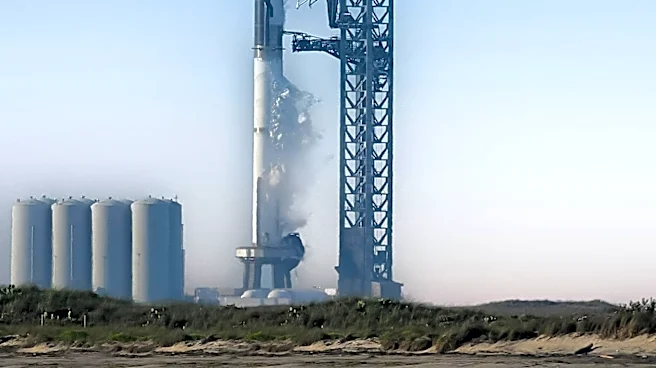
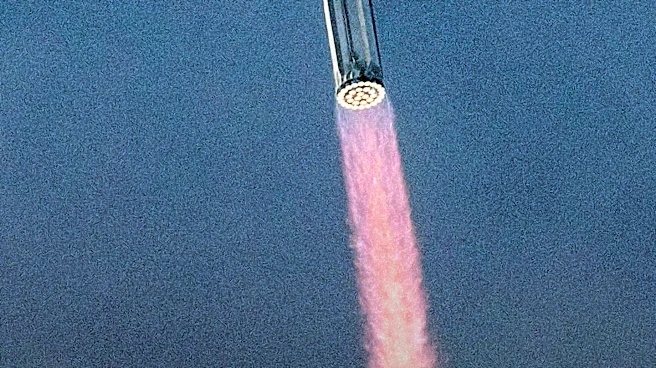
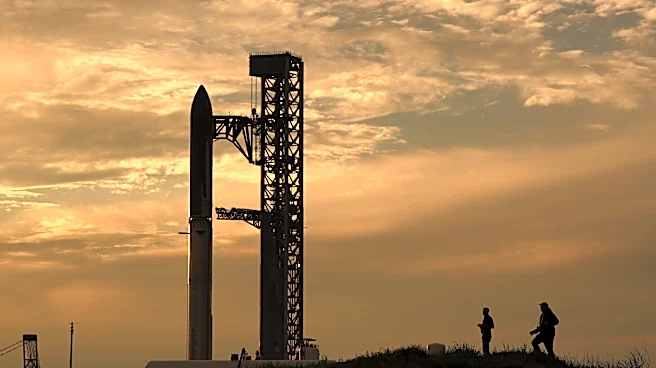
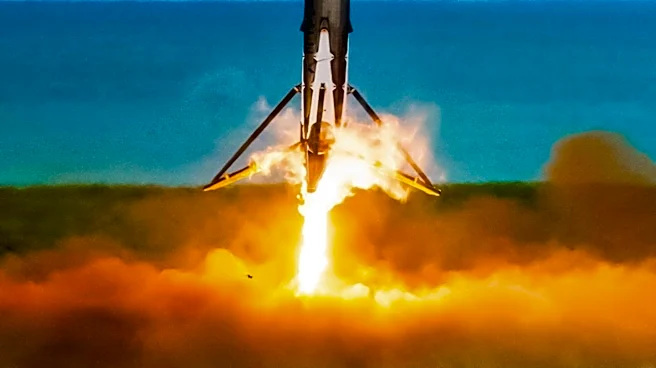
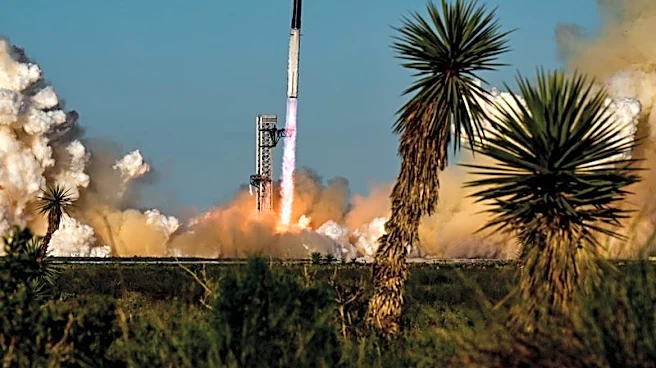
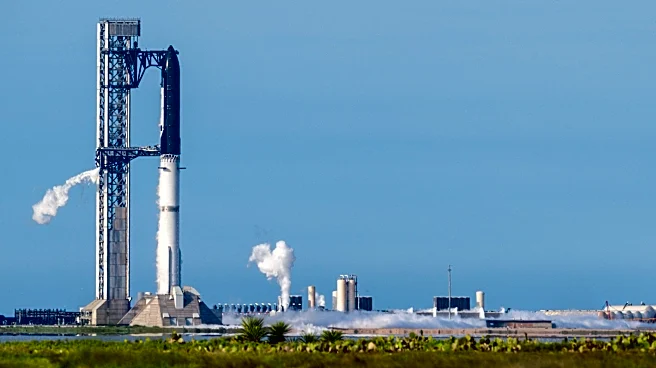
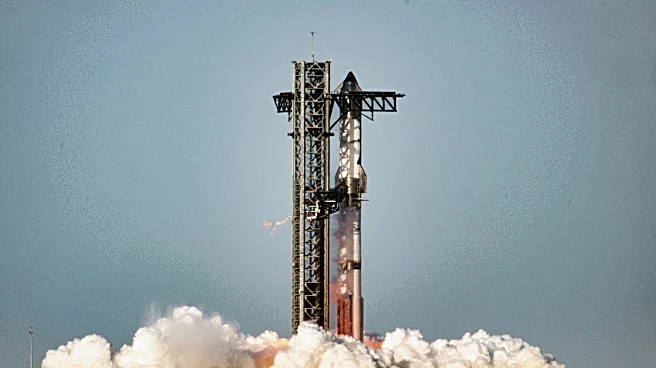
SpaceX successfully caught a full-sized, orbital-class rocket in mid-air as it returned from space to the Starbase launch pad in Boca Chica, South Texas, on Saturday, November 14, 2026. This unprecedented feat involved giant mechanical arms, dubbed 'chopstick'
pinchers, capturing the Starship as it descended autonomously from orbit. According to Sven Bilén, a professor of engineering design, electrical engineering, and aerospace engineering, the maneuver required precise autonomous navigation and positioning within inches of the target capture point after re-entering Earth's atmosphere. While the booster experienced an anomaly and was intentionally dropped into the Gulf, the successful capture of the Starship marks a significant milestone in space exploration, demonstrating a new level of reusability for spacecraft.
Why It's Important?
The successful mid-air capture of an orbital-class rocket by SpaceX is a pivotal moment for the future of space travel and its economics. This achievement significantly advances the goal of full reusability, which is crucial for drastically reducing the cost of space launches. Currently, rockets are largely single-use, making space access prohibitively expensive. By enabling the reuse of spacecraft, similar to how airplanes are reused in air travel, SpaceX aims to lower the cost per pound to orbit from tens of thousands of dollars to a more affordable rate. This cost reduction is essential for deploying large constellations of satellites, such as Starlink, which are vital for global internet connectivity, weather forecasting, and other critical space-based services. The ability to rapidly refurbish and relaunch spacecraft will transform the space industry, making it more accessible and sustainable.
What's Next?
Following this historic capture, SpaceX's immediate next steps involve assessing the cost and speed of refurbishing the Starship for subsequent flights. This evaluation will determine the economic viability and operational efficiency of their reusability model. The company has now demonstrated the capability to capture both boosters and the Starship itself, setting the stage for routine reusability. The broader impact will be a continued 'arms race' in the space industry, particularly with competitors like Amazon, who are also striving to establish their satellite constellations and launch capabilities. The success of SpaceX's reusability efforts will likely accelerate innovation across the sector, pushing other companies to develop similar cost-saving technologies to remain competitive in the rapidly evolving space economy.
Beyond the Headlines
The implications of SpaceX's reusability breakthrough extend beyond mere cost savings; they represent a fundamental shift in how humanity approaches space. By making space access more affordable and frequent, this technology could democratize space, opening it up to a wider range of scientific research, commercial ventures, and even space tourism. The ability to launch more satellites at lower costs will enhance global connectivity, improve Earth observation capabilities for climate monitoring, and facilitate deeper space exploration missions. This technological leap also challenges traditional aerospace engineering paradigms, fostering a culture of rapid iteration and innovation. Ultimately, it moves humanity closer to a future where space is not just a frontier for exploration but a regular domain for human activity and economic development, fundamentally altering our relationship with the cosmos.