
What's Happening?
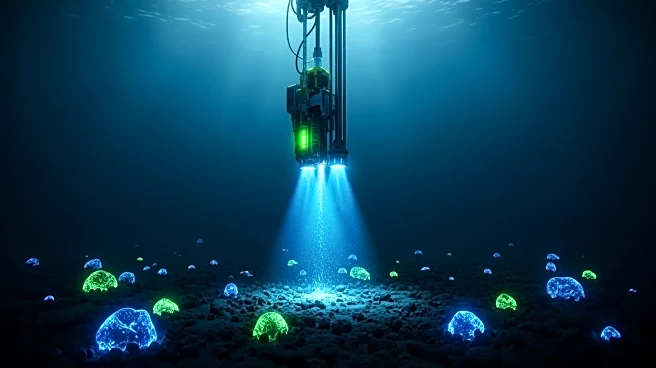
Japan is set to begin test mining of rare-earth-rich mud from the deep seabed off Minamitori Island, located approximately 1,900 kilometers southeast of Tokyo. This operation, scheduled from January 11
to February 14, marks the world's first attempt to continuously extract rare-earth mud from a depth of around 6,000 meters. The initiative is part of a government-backed project aimed at securing a stable supply of critical minerals, as China, the leading supplier of rare earths, imposes tighter export controls. The project, which has cost about 40 billion yen ($256 million) since 2018, is a strategic move by Japan to build a domestic supply chain for these essential minerals. The test will focus on the system's ability to lift 350 metric tons of rare-earth mud per day, with environmental impacts being closely monitored.
Why It's Important?
The test mining operation is significant as it represents Japan's efforts to reduce dependency on China for rare earths, which are crucial for various industries, including electronics and renewable energy. As China tightens its export controls, countries like Japan are seeking alternative sources to ensure economic and industrial stability. The success of this project could lead to a full-scale mining trial in 2027, potentially altering the global supply chain for rare earths. This development also highlights the geopolitical tensions in the region, as evidenced by the presence of a Chinese naval fleet in the area during Japan's surveys. The outcome of this project could influence international relations and economic strategies concerning critical mineral resources.
What's Next?
If the test mining proves successful, Japan plans to conduct a full-scale mining trial in February 2027. This could significantly impact the global rare earth market by providing an alternative source outside of China. The Japanese government will continue to monitor environmental impacts and refine the technology used in the extraction process. Additionally, geopolitical dynamics in the region may evolve, as Japan's actions could prompt responses from China and other countries with interests in rare earths. The project's progress will be closely watched by international stakeholders, including industries reliant on these minerals.
Beyond the Headlines
The initiative underscores the growing importance of securing critical mineral resources in the face of geopolitical challenges. It also raises questions about the environmental implications of deep-sea mining, a relatively new and untested method of resource extraction. The project could set a precedent for future deep-sea mining operations, prompting discussions on international regulations and environmental protections. Furthermore, Japan's move may encourage other nations to explore similar projects, potentially leading to a shift in the global balance of power concerning rare earth resources.