








What's Happening?
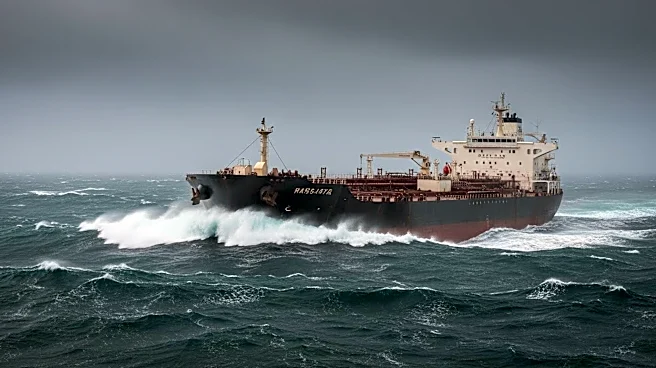
The Indian Coast Guard conducted a rescue operation on July 5, 2026, to secure three tankers linked to Iran that were being driven toward the shore by a monsoon. These vessels, named Asphalt Star, Stella Ruby, and Al Jafzia, were detained by Indian authorities
in February on charges of participating in a fuel smuggling operation. The tankers were reportedly involved in illegal ship-to-ship transfers and had been sanctioned by the United States. During the monsoon, the ships began dragging their anchors, prompting the Coast Guard to intervene. The Al Jafzia, which had been abandoned, went aground, while the other two were secured at a new anchorage. The Coast Guard also deployed a pollution control vessel to prevent environmental damage.
Why It's Important?
This incident highlights the ongoing challenges of maritime security and the enforcement of international sanctions. The involvement of Iran-linked vessels in smuggling operations underscores the complexities of global trade and the enforcement of sanctions. The rescue operation by the Indian Coast Guard not only prevented potential environmental damage but also demonstrated India's commitment to maintaining maritime safety and security. The situation also reflects the broader geopolitical tensions involving Iran and the enforcement of U.S. sanctions, which have significant implications for international shipping and trade routes.
What's Next?
The ongoing investigation into the smuggling operation and the legal proceedings against the shipowners and crew members will likely continue. The Indian authorities may face diplomatic and legal challenges in resolving the status of the detained vessels. Additionally, the incident may prompt further scrutiny of maritime activities in the region, potentially leading to increased enforcement measures and international cooperation to prevent similar incidents in the future.
Beyond the Headlines
The case of the Iran-linked tankers raises questions about the effectiveness of international maritime regulations and the ability of countries to enforce sanctions. The use of false registries by the vessels highlights the challenges in tracking and regulating ships involved in illicit activities. This incident may lead to calls for stronger international collaboration and improved tracking technologies to enhance maritime security and prevent illegal activities at sea.