

What's Happening?
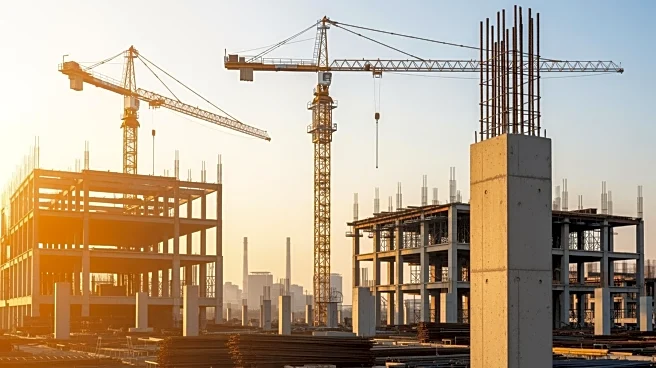
Prime Minister Narendra Modi's government has announced a significant increase in infrastructure spending as part of India's budget for the upcoming fiscal year. The budget, presented by Finance Minister Nirmala Sitharaman, raises infrastructure spending by approximately
9% to a record 12.2 trillion rupees ($133 billion). This move is aimed at bolstering the manufacturing sector to drive economic growth, especially as India faces challenging U.S. tariffs. The budget also emphasizes the development of sectors such as biopharma, semiconductors, and rare earths, which are seen as critical for India's economic expansion. The increased spending is part of a broader strategy to enhance India's economic resilience and competitiveness on the global stage.
Why It's Important?
The increase in infrastructure spending is crucial for India's economic strategy, particularly in light of the U.S. tariffs that have impacted the country's trade dynamics. By focusing on manufacturing and infrastructure, India aims to create jobs, boost domestic production, and reduce dependency on imports. This approach is expected to strengthen India's position in the global economy and attract foreign investment. The emphasis on sectors like biopharma and semiconductors aligns with global trends towards technological advancement and innovation, potentially positioning India as a key player in these industries. The budget's focus on infrastructure and manufacturing could lead to significant economic growth and development, benefiting various stakeholders, including businesses and the workforce.
What's Next?
Following the budget announcement, the Indian government is likely to implement policies and initiatives to facilitate the increased infrastructure spending and support the manufacturing sector. This may include regulatory reforms, incentives for businesses, and partnerships with international companies. The response from global investors and trade partners will be critical in determining the success of these initiatives. Additionally, the government may face challenges in balancing economic growth with environmental and social considerations, particularly in sectors like rare earths and biopharma. Monitoring the impact of these policies on India's economic performance and global trade relations will be essential in the coming months.