






What's Happening?
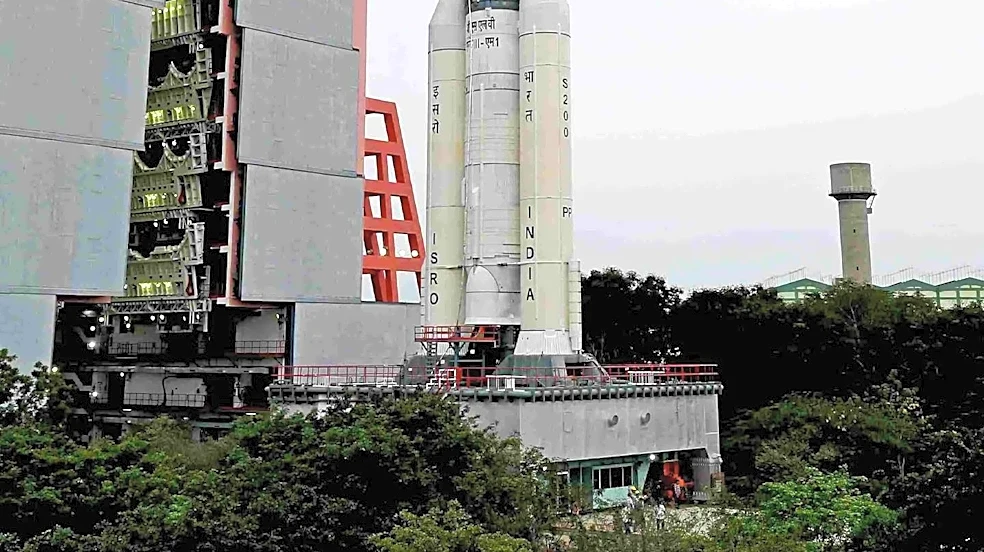
The Indian Space Research Organisation (ISRO) launched its Aditya-L1 mission in 2023, positioning it at the Sun-Earth Lagrange Point 1 (L1) to achieve uninterrupted observation of the Sun. Unlike previous solar missions by NASA and ESA, Aditya-L1's strategic
location at L1 allows it to continuously view the Sun without the interference of eclipses or occultation, providing 24/7 data. Professor R Ramesh, Senior Professor at the Indian Institute of Astrophysics and Principal Investigator for the Visible Emission Line Coronagraph (VELC) payload on Aditya-L1, highlights that this continuous observation is crucial for studying eruptive phenomena in the Sun's atmosphere, particularly Coronal Mass Ejections (CMEs). The mission aims to understand the Sun-Earth connection, known as space weather, and address the long-standing mystery of why the Sun's corona is significantly hotter than its surface. All data collected by Aditya-L1 is shared with the global scientific community to enhance space weather forecasting.
Why It's Important?
The continuous data from Aditya-L1 is vital for understanding Coronal Mass Ejections (CMEs), which are powerful eruptions from the Sun that can travel at speeds up to 3,000 kilometers per second towards Earth. These CMEs pose a significant threat to space-based technologies, including satellites essential for TV broadcasts, mobile communication, and weather forecasting. While CMEs may not physically destroy satellites, they can damage their electronics, leading to service disruptions and substantial economic losses. On Earth, CMEs can disturb the planet's geomagnetic field, potentially affecting power transformers and underground pipelines. By providing an uninterrupted view of the Sun, Aditya-L1 allows scientists to better predict when and which CMEs might impact Earth, enabling proactive measures to protect critical infrastructure and mitigate socio-economic consequences. The mission also contributes to solving fundamental solar physics mysteries, such as the coronal heating problem, which has implications for our broader understanding of stellar processes.
What's Next?
Scientists will continue to analyze the extensive data gathered by Aditya-L1 to refine their understanding of CMEs. The mission aims to identify the characteristics of CMEs that are most likely to impact Earth's magnetic field, distinguishing them from those that pose no threat. This ongoing research will contribute to developing more accurate space weather prediction models. The shared data with the international scientific community will foster collaborative efforts to improve global space weather forecasting capabilities. In the coming decade, with a larger statistical database, researchers anticipate being able to pinpoint specific CMEs that will reach Earth and predict the type of disturbances they might cause. This advanced understanding will be crucial for safeguarding an increasingly technology-dependent society, where satellites play a central role in daily life and economic activities.
Beyond the Headlines
The Aditya-L1 mission underscores the growing importance of space weather in an era heavily reliant on satellite technology. The mission's focus on understanding CMEs highlights a critical vulnerability in modern infrastructure, where events occurring millions of miles away can have tangible impacts on Earth's power grids, communication networks, and navigation systems. This mission also represents a significant step in international scientific collaboration, as data is openly shared, fostering a collective effort to address global challenges posed by solar activity. The long-standing mystery of the coronal heating problem, which Aditya-L1 seeks to unravel, points to fundamental gaps in our understanding of the Sun's physics. Solving such mysteries not only advances scientific knowledge but also improves our ability to predict and prepare for solar phenomena that could affect future space exploration and technological advancements.