
What's Happening?
Scientists from Aarhus University in Denmark and the Geological Survey of Denmark and Greenland, in collaboration with filmmakers Lars Ostenfeld and Antoine Drancey, have captured unprecedented footage
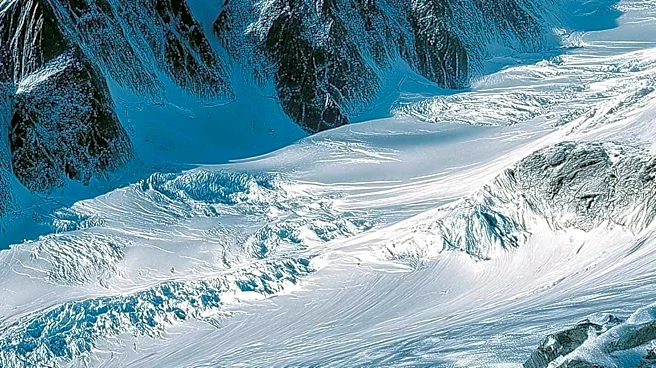
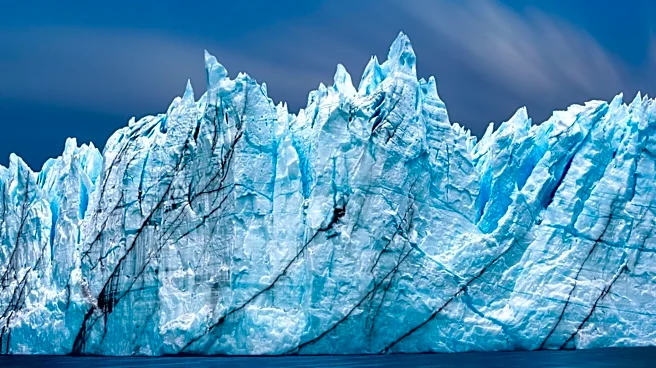
of a rare ocean ecosystem at the marine terminus of the Naajat Sermiat glacier in South Greenland. Utilizing a remotely operated vehicle (ROV) due to the hazardous conditions, the team observed a diverse community of marine life, including krill, fish, worms, crustaceans, amphipods, copepods, squid, shrimps, jellyfish, and crab larvae. The ROV footage revealed 'waterfalls' of sediment flowing from the glacier, which krill appeared to actively feed on. This suggests a direct link between the glacier's meltwater and the local food web, with organisms even resting on the glacier's surface. The initial goal was to study meltwater refreezing, but the extensive life discovered became a primary focus. This research provides crucial data for understanding how life adapts to and thrives in these extreme, difficult-to-access environments.
Why It's Important?
This discovery is significant for understanding the resilience and adaptability of marine ecosystems in the face of climate change. As glaciers worldwide retreat due to rising temperatures, understanding how these unique environments support life becomes critical. The direct observation of krill feeding on glacial sediment plumes suggests that glaciers may provide a direct food source, challenging previous assumptions that nutrient upwelling from meltwater was the sole driver of productivity. This finding could alter our understanding of Arctic food webs and the potential impacts of glacial retreat. If these ecosystems are directly dependent on glacial material, their survival is directly threatened as glaciers recede onto land. The research highlights the intricate connections between glacial processes and marine biodiversity, offering new insights into the biological consequences of a warming planet.
What's Next?
Further research is required to definitively determine whether material from within the glacier constitutes a significant food source for krill and other organisms. Scientists will need to analyze the composition of the sediment plumes and the dietary habits of the observed species to confirm this direct nutritional link. As glacial melting accelerates, ongoing monitoring of these ecosystems will be crucial to track changes in biodiversity and food web dynamics. The team plans to investigate how the retreat of glaciers onto land might impact these specific food webs. Understanding these dynamics will inform conservation efforts and predictive models for Arctic marine life, especially as more glaciers transition from marine-terminating to land-terminating, potentially altering the nutrient supply and habitat for these unique communities.
Beyond the Headlines
The discovery at Naajat Sermiat glacier underscores the vast unknowns that still exist within Earth's extreme environments and the potential for unexpected ecological relationships. It raises ethical considerations regarding the preservation of these fragile ecosystems, which are directly threatened by human-induced climate change. The visual evidence of a thriving community in such a harsh environment challenges perceptions of glaciers as sterile landscapes, revealing them as dynamic contributors to marine biodiversity. This research could also inspire new approaches to studying other extreme environments, utilizing advanced robotic technologies to explore areas inaccessible to humans. The long-term implications point to a potential re-evaluation of how glacial melt is factored into global carbon cycles and nutrient distribution, suggesting a more complex interplay than previously understood.