


What's Happening?
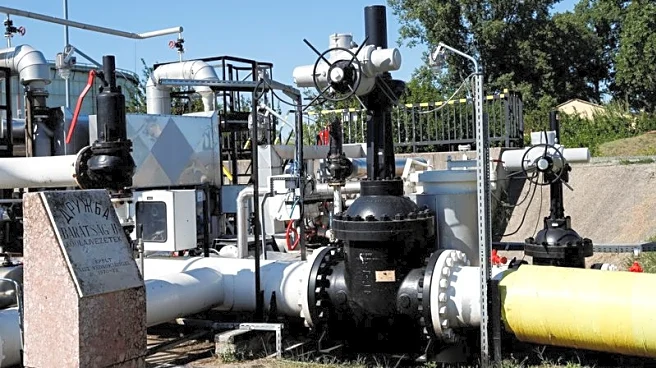
Croatia is currently assessing the legality of importing Russian crude oil to supply Hungary and Slovakia after the Druzhba pipeline, which previously supplied these countries via Ukraine, was damaged. The European Commission reported that the supply was halted
on January 27 due to damage attributed to a Russian drone strike. Croatia's Adria pipeline, operated by Janaf, is being considered as an alternative route. Janaf has already begun unloading non-Russian crude for Hungarian refiner MOL Group, with more shipments expected. The Croatian government has not yet commented on the situation, but Economy Minister Ante Susnjar indicated that non-Russian oil is currently being supplied to Hungary and Slovakia. The EU sanctions ban seaborne Russian crude imports, but Slovakia and Hungary have exemptions due to their landlocked status.
Why It's Important?
The situation highlights the ongoing geopolitical tensions and the impact of EU sanctions on Russian oil. The disruption of the Druzhba pipeline underscores the vulnerability of energy supplies in Europe, particularly for countries like Hungary and Slovakia that rely heavily on Russian oil. Croatia's decision on whether to import Russian oil could influence EU energy policies and sanctions enforcement. The potential use of the Adria pipeline as an alternative route could provide a temporary solution, but it also raises questions about compliance with international sanctions. The outcome of this assessment could affect regional energy security and the broader EU strategy to reduce dependency on Russian energy.
What's Next?
Croatia's decision on importing Russian oil will likely influence EU discussions on energy security and sanctions. Hungary's recent veto of new EU sanctions on Russia and its blocking of an EU loan for Ukraine add complexity to the situation. The EU plans to propose a full ban on Russian oil imports by 2027, which could further strain relations with Hungary and Slovakia. Meanwhile, Ukraine is working to repair the Druzhba pipeline and has offered alternative routes for oil transport. The European Commission is evaluating these options, which could provide midterm solutions to the current supply disruptions.