

What's Happening?
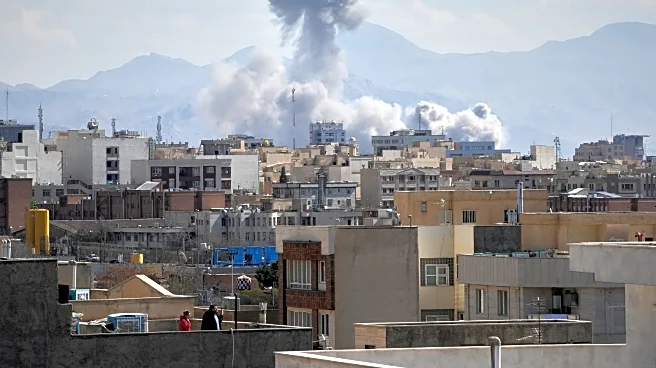
Iran has reportedly halted navigation through the Strait of Hormuz, a critical maritime passageway, following retaliatory actions triggered by U.S. and Israeli strikes. This development has resulted in at least three tankers being damaged off the Gulf
coast, according to maritime sources and officials. The Strait of Hormuz is a vital channel for global oil supply, carrying about 20% of the world's oil, including exports from major producers like Saudi Arabia, the United Arab Emirates, Iraq, Kuwait, and Iran. The closure has led to a significant increase in shipping risks, with over 200 vessels, including oil and liquefied natural gas tankers, anchoring around the strait and nearby waters. The U.S. Maritime Administration has advised vessels to avoid the area due to the risk of further retaliatory strikes and potential threats from naval mines.
Why It's Important?
The closure of the Strait of Hormuz by Iran poses a significant threat to global oil supply and maritime security. As a major conduit for oil exports, any disruption in the strait can lead to substantial economic repercussions worldwide, potentially causing a spike in oil prices. This situation underscores the geopolitical tensions in the region and highlights the vulnerability of global energy supply chains to regional conflicts. The actions taken by Iran in response to U.S. and Israeli military activities could escalate tensions further, affecting international relations and economic stability. Stakeholders in the energy sector, including oil-producing nations and global markets, are likely to be impacted by these developments.
What's Next?
The international community, particularly countries reliant on oil imports through the Strait of Hormuz, will be closely monitoring the situation. Diplomatic efforts may be initiated to de-escalate tensions and ensure the safe passage of vessels through the strait. The U.S. and its allies might consider increasing their naval presence in the region to protect commercial shipping lanes. Additionally, oil markets will be watching for any signs of prolonged disruption, which could lead to strategic releases from oil reserves to stabilize prices. The potential for further military engagements in the region remains a concern, with implications for global security and economic stability.