






What's Happening?
China's Tianwen-2 spacecraft has reached the quasi-moon Kamoʻoalewa, a small asteroid that orbits the Sun in a path similar to Earth's. This asteroid is suspected to be a fragment of the Moon, potentially ejected by an ancient impact. The spacecraft,
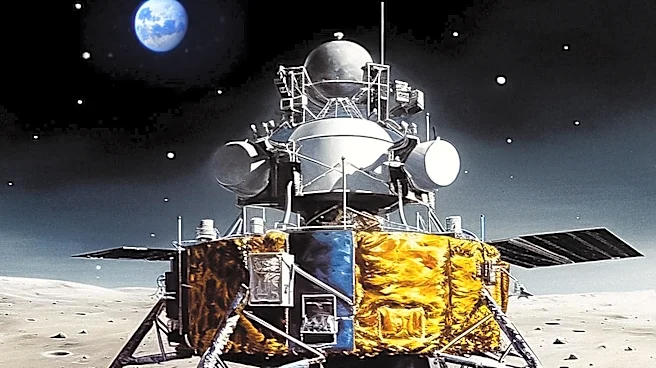
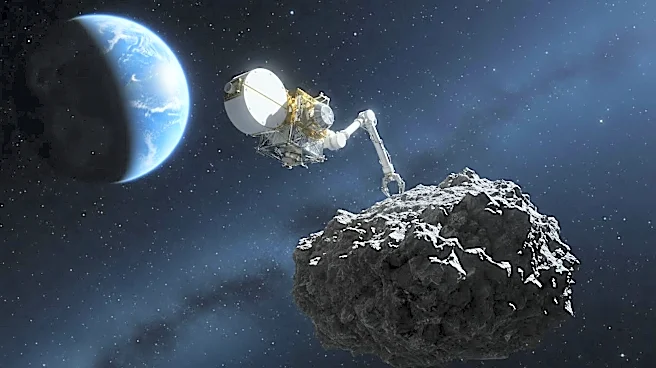
launched by the China National Space Administration, aims to collect samples from Kamoʻoalewa and return them to Earth. The mission marks China's first attempt at an asteroid sample return and follows similar missions by Japan and NASA. The spacecraft is currently mapping the asteroid and preparing for the challenging task of collecting samples from its rapidly spinning surface.
Why It's Important?
The Tianwen-2 mission represents a significant step in China's space exploration efforts and contributes to the global understanding of near-Earth objects. If Kamoʻoalewa is confirmed to be a fragment of the Moon, the samples could provide valuable insights into the history of lunar impacts and the processes that shape celestial bodies. The mission also demonstrates China's growing capabilities in space exploration and its commitment to advancing scientific knowledge. Successful sample collection and analysis could enhance our understanding of the solar system's formation and the potential for similar missions in the future.
What's Next?
The Tianwen-2 spacecraft will continue to study Kamoʻoalewa and attempt to collect samples using various techniques. The mission is expected to last until 2027, with the sample return capsule scheduled to land in Inner Mongolia later that year. The success of this mission could pave the way for future asteroid exploration and sample return missions, potentially targeting other near-Earth objects. The data collected from Kamoʻoalewa will be analyzed to determine its composition and origin, providing new insights into the history of the Moon and the solar system.