





What's Happening?
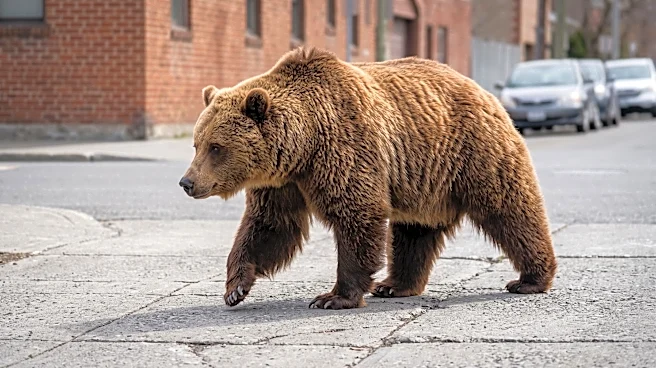
A deliveryman in Montana recently encountered a brown-coated bear on a sidewalk near a busy street, an event captured on video and shared by Melodee Hanes. The footage shows the bear moving past a brick building while the deliveryman stands nearby with
equipment, with cars passing on the street. This incident serves as a reminder that wildlife, particularly bears, can appear in unexpected urban or suburban settings. Montana is home to both black bears and grizzly bears, and while the specific species in the video could not be definitively identified, black bears can also have brown or cinnamon-colored coats. Bears are especially active in the fall as they seek food to build fat reserves for winter, which often brings them closer to human-populated areas, including neighborhoods and businesses.
Why It's Important?
This encounter underscores the increasing interaction between humans and wildlife in the U.S., particularly in states like Montana where bear populations are significant. As human development expands and bears forage more widely, such incidents are likely to become more common. This proximity raises public safety concerns and highlights the need for residents and workers in these areas to be aware of wildlife behavior and safety protocols. The Montana Fish, Wildlife & Parks advises against approaching bears or running from them, instead recommending giving them space and slowly moving away if the animal is not aggressive. Understanding these guidelines is crucial for minimizing potential conflicts and ensuring the safety of both humans and animals.
What's Next?
The increasing frequency of wildlife sightings in developed areas suggests a continued need for public education on how to safely coexist with bears. Local wildlife agencies, such as Montana Fish, Wildlife & Parks, will likely continue to emphasize and disseminate safety guidelines to residents and visitors. This includes advice on securing food and garbage, which are common attractants for bears, and what to do during an encounter. Communities in bear-prone regions may also need to consider urban planning strategies that account for wildlife corridors and minimize human-wildlife conflict. The incident serves as a localized example of a broader trend that requires ongoing vigilance and adaptive management strategies.
Beyond the Headlines
The appearance of bears in urban settings like this Montana incident points to deeper ecological and societal implications. It reflects the ongoing challenge of balancing human expansion with wildlife conservation. As natural habitats shrink or become fragmented, animals are forced into closer contact with human populations, leading to increased encounters. This can lead to a shift in public perception of wildlife, from distant wilderness creatures to immediate neighbors, potentially influencing local policies on land use, waste management, and wildlife intervention. The ethical considerations of managing these interactions, including the potential for harm to both humans and animals, will continue to be a significant discussion point for environmental agencies and communities.