


What's Happening?
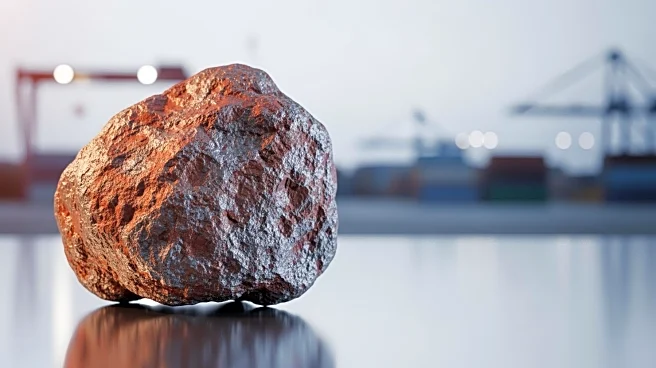
China has received its first shipment of Simandou iron ore, marking a significant development in global commodity markets. This shipment is part of China's strategy to diversify its iron ore supply, traditionally dominated by Australia and Brazil. The
Simandou project in Guinea is notable for its high-grade iron ore, with reserves containing 65% iron content, which is higher than the typical 60-62% found in other regions. The project required extensive infrastructure development, including transportation and port facilities, to support its 120 million tonnes annual production capacity. The arrival of this shipment underscores China's efforts to secure resource stability through diversified supply chains, reducing its dependency on traditional suppliers.
Why It's Important?
The diversification of China's iron ore supply is crucial for mitigating risks associated with geopolitical tensions and supply disruptions from its traditional suppliers, Australia and Brazil. By investing in West African mining projects, China is not only securing a stable supply of high-grade iron ore but also enhancing its negotiating leverage in the global market. This move could lead to more competitive pricing and reduced exposure to market volatility. Additionally, the development of infrastructure in Guinea positions the region as a significant player in the global iron ore market, potentially attracting further investments and fostering economic growth in West Africa.
What's Next?
As China continues to scale up its operations in Guinea, the focus will be on optimizing the logistics and infrastructure to support full production capacity. This includes addressing potential bottlenecks in transportation and ensuring efficient port operations. The success of the Simandou project could pave the way for additional mining developments in the region, further solidifying Guinea's role as a key supplier in the global iron ore market. Moreover, China's strategic partnerships and investments in African mining infrastructure may encourage other nations to explore similar opportunities, potentially reshaping global supply chains.