
What's Happening?
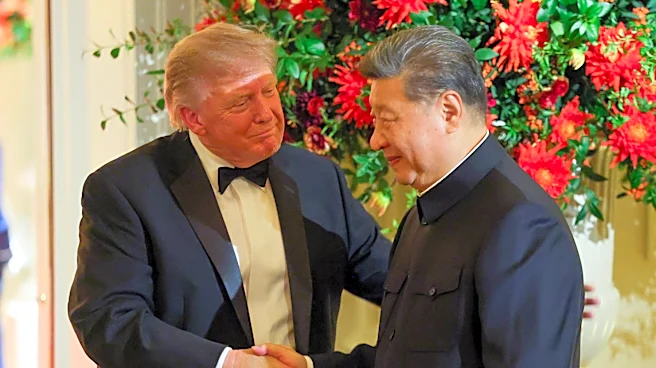
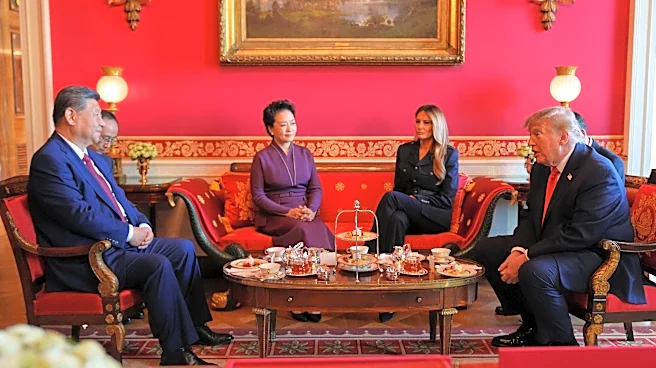
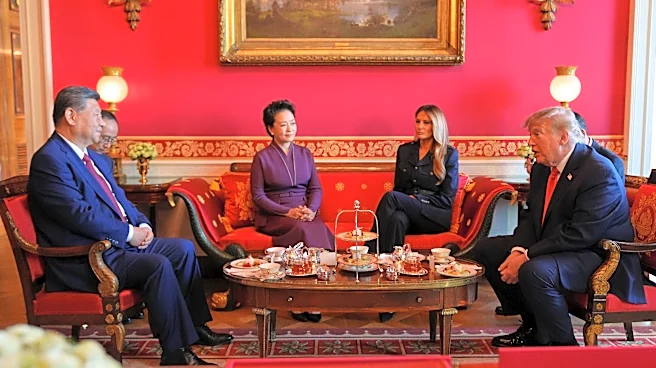
U.S. federal Representative Ami Bera, co-chair of the House of Representatives' Taiwan Caucus, stated that U.S. policy towards Taiwan remains unchanged following a meeting with President Trump. Speaking
during a midterm election event, Representative Bera indicated that there were no 'messy' outcomes from the meeting and that President Trump had clarified any concerns regarding arms sales to China. He emphasized that U.S. policy, from the executive branch to Congress, has not shifted. Representative Bera noted that while President Trump's remarks can sometimes lack clarity regarding underlying intentions, he believes the U.S. stance on Taiwan, including arms sales, is consistent. The purpose of these arms sales is to maintain regional status quo, peace, and prosperity, not to escalate tensions in the Taiwan Strait. He also mentioned that congressional members had expressed concerns about potential statements from President Trump regarding arms sales to China, but these concerns were alleviated by President Trump's prompt clarification.
Why It's Important?
This affirmation from Representative Bera is crucial for regional stability and U.S. foreign policy credibility. Taiwan is a critical geopolitical flashpoint, and any perceived shift in U.S. policy could have significant implications for cross-strait relations and broader Indo-Pacific security. The U.S. 'One China' policy, coupled with the Taiwan Relations Act and the Six Assurances, forms the bedrock of its engagement with Taiwan, balancing strategic ambiguity with a commitment to Taiwan's defense capabilities. Maintaining a consistent policy reassures allies in the region, such as Japan and other nations, that the U.S. is a reliable partner in upholding peace and prosperity. Conversely, any ambiguity or perceived weakening of this stance could embolden adversarial actors, potentially leading to increased military posturing or miscalculations. The emphasis on arms sales for deterrence, rather than provocation, underscores a strategic approach aimed at preventing conflict while supporting Taiwan's self-defense.
What's Next?
Following Representative Bera's statements, it is expected that U.S. congressional members will continue to publicly clarify and reinforce the consistent U.S. policy towards Taiwan. The House Taiwan Caucus and bipartisan members of Congress are likely to maintain their efforts to accelerate arms sales to Taiwan, framing these actions as deterrents against potential aggression and as measures to preserve regional peace and prosperity. Discussions between U.S. and Taiwanese officials will likely continue to focus on strengthening defense capabilities and enhancing mutual understanding. Furthermore, high-level officials from the executive branch are anticipated to reiterate the U.S. commitment to its long-standing policy, as they have done in previous congressional hearings. The ongoing dialogue regarding artificial intelligence risks and protective measures, as mentioned by Representative Bera, suggests a broader strategic engagement beyond immediate defense concerns, indicating a comprehensive approach to regional security and technological cooperation.
Beyond the Headlines
The underlying implications of Representative Bera's remarks extend to the delicate balance of power in the Indo-Pacific and the evolving nature of international diplomacy. The U.S. policy towards Taiwan, while seemingly consistent, is constantly scrutinized by global powers. The emphasis on 'deterrence, not provocation' highlights a strategic tightrope walk, where the U.S. aims to project strength without escalating tensions. This approach also reflects a broader U.S. strategy to counter growing influence in the region by strengthening alliances and promoting a rules-based international order. The mention of artificial intelligence risks in high-level discussions suggests an emerging dimension to geopolitical strategy, where technological advancements intersect with national security. This indicates a shift towards a more holistic security framework that includes not only traditional military deterrence but also cyber and technological safeguards, underscoring the complex challenges in maintaining stability in a rapidly changing global landscape.