





What's Happening?
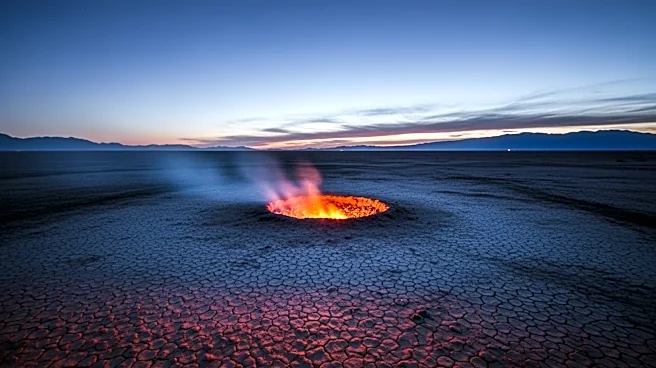
The Darvaza gas crater in Turkmenistan, known as the 'Gates of Hell,' is experiencing a reduction in its flames after burning continuously for over 50 years. This phenomenon, initially caused by a Soviet drilling accident in 1971, has become a tourist
attraction. However, the dimming flames are raising environmental concerns due to the potential increase in methane emissions. Methane, a potent greenhouse gas, could escape into the atmosphere if the flames extinguish completely, exacerbating climate change. The reduction in flames has been linked to new gas extraction wells, but experts suggest natural processes may also be contributing.
Why It's Important?
The dimming of the 'Gates of Hell' flames has significant environmental implications. Methane is a more potent greenhouse gas than carbon dioxide, and its release could accelerate global warming. The situation highlights the complex balance between natural phenomena and human intervention in managing environmental impacts. The potential increase in methane emissions underscores the need for effective strategies to mitigate climate change, which is a global concern affecting weather patterns, sea levels, and ecosystems.
What's Next?
The future of the Darvaza gas crater remains uncertain. If the flames continue to dim, there may be increased pressure on the Turkmen government and international environmental bodies to address the potential methane emissions. This could lead to new policies or technological solutions aimed at capturing or mitigating methane release. The situation also presents an opportunity for further research into the environmental impacts of similar natural phenomena and the development of strategies to manage them effectively.