



What's Happening?
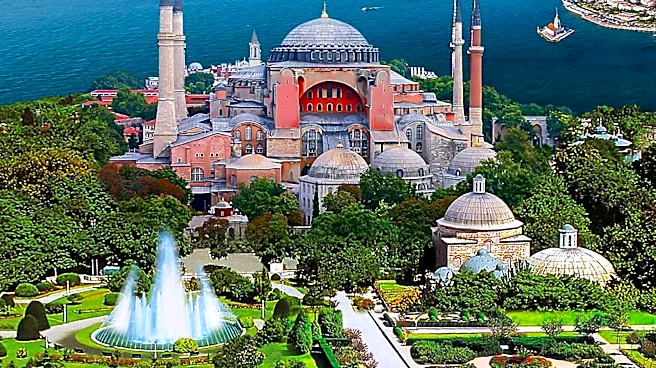
Restoration and cleaning operations beneath Hagia Sophia have led to the discovery of an extensive network of previously unknown tunnels and chambers, significantly expanding the documented underground structures of the historic site. Built between 532
and 537 C.E. under Byzantine Emperor Justinian I, Hagia Sophia's underground system was previously thought to consist of only a few hundred feet of passages. Professor Hasan Fırat Diker, whose study was published in Open Archaeology, documented these findings as crews removed approximately 300 tons of soil and rubble. The newly exposed network extends for about 5.6 miles and includes water-management infrastructure, with one branch whose function remains unresolved. The cleaning process was challenging, requiring teams experienced in mining operations due to narrow, dark, and poorly ventilated spaces. The discoveries include a chamber with seven separate conduits, indicating repeated modifications over time, and a particularly enigmatic 'Structure 6' that does not fit the pattern of water tunnels.
Why It's Important?
The discovery of miles of previously unknown tunnels beneath Hagia Sophia is profoundly important for historical and archaeological understanding. It drastically alters the perception of the site's substructure, revealing a much more complex and extensive underground system than previously imagined. This expanded network provides invaluable data concerning the multilayered history and engineering prowess of the Byzantine era, particularly regarding water management and urban planning in ancient Constantinople. The presence of distinct water conduits from different periods highlights the critical role of infrastructure in supporting the dense settlement above and the ceremonial significance of the atrium. The enigmatic 'Structure 6,' which lacks terracotta pipes and has an irregular layout, suggests potential non-water-related functions, opening new avenues for research into the site's diverse historical uses and hidden purposes. This discovery could lead to a re-evaluation of historical texts and archaeological interpretations related to Hagia Sophia and Byzantine engineering.
What's Next?
Researchers have not yet completed clearing the entire network of tunnels beneath Hagia Sophia. Several sections remain blocked by mud and debris from earlier collapses, indicating that additional passages may be revealed as cleaning work continues. The ongoing exploration and documentation, utilizing 3D mapping, will further clarify the orientation and interrelations of these underground spaces. Future work will focus on fully understanding the purpose of structures like 'Structure 6,' which currently remains enigmatic. This will likely involve further archaeological analysis, historical research, and potentially the use of advanced imaging techniques to explore inaccessible areas. The findings are expected to significantly expand current understanding of Hagia Sophia’s substructure once the cleaning is complete, potentially leading to new publications and exhibitions that share these discoveries with the public and academic communities.
Beyond the Headlines
The uncovering of such an extensive and complex underground system beneath Hagia Sophia has deeper implications beyond mere architectural discovery. It underscores the continuous evolution and adaptation of ancient urban environments, where infrastructure was constantly modified to meet changing needs over centuries. The sheer scale of the network suggests a highly sophisticated understanding of hydraulic engineering and urban planning in the Byzantine Empire, challenging previous assumptions about the limitations of ancient technology. Furthermore, the existence of an enigmatic branch with an unknown function invites speculation about hidden rituals, secret passages, or specialized uses that have been lost to history. This discovery could inspire new interdisciplinary research, combining archaeology, history, engineering, and cultural studies, to piece together a more complete narrative of one of the world's most significant historical monuments. It also highlights the ongoing potential for major historical revelations even in well-studied sites.