








What's Happening?
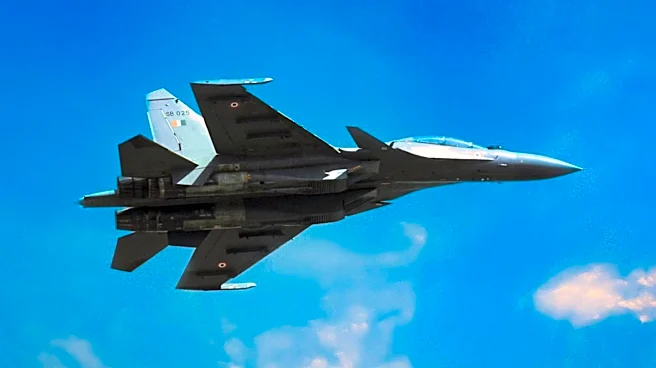
A U.S. Air Force C-17 Globemaster transport aircraft, en route from Christchurch, New Zealand, to McMurdo Station in Antarctica, was forced to turn back approximately two hours into its flight on Tuesday, August 18. The diversion occurred after Russia's
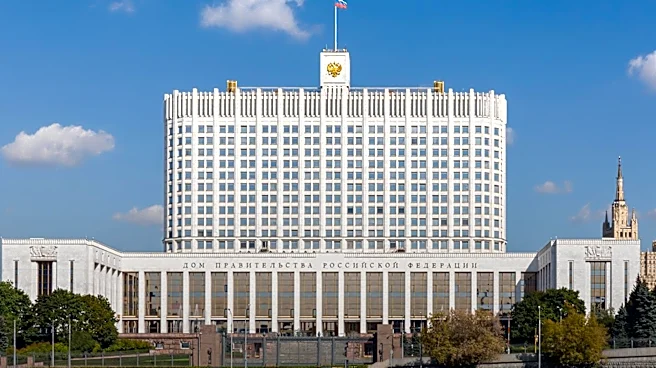
State Air Traffic Management Corporation issued a notice advising of 'space activity, potentially hazardous to aviation en route to Antarctica.' New Zealand's Civil Aviation Authority (CAA) confirmed the incident, stating that the Russian agency had informed them of a planned missile launch and associated potential hazard within the New Zealand Oceanic Flight Information Region. The U.S. Federal Aviation Administration (FAA) had previously issued a NOTAM (Notice to Airmen) on August 10 for a large airspace over Australia and the Indian Ocean, indicating 'Russian aerospace activities' and 'possible debris' starting August 14. The specific nature of the Russian space activity remains undisclosed by the USAF.
Why It's Important?
This incident highlights the growing complexities and potential hazards in international airspace, particularly concerning space-related activities. The diversion of a U.S. military aircraft due to a Russian warning underscores the need for clear communication and coordination in an increasingly congested orbital environment. Such events can disrupt critical logistical operations, like those supporting scientific research in Antarctica, and raise questions about the safety of air travel in regions affected by space launches or re-entries. The involvement of multiple international agencies—U.S. Air Force, New Zealand CAA, Russian Air Traffic Management, and the FAA—demonstrates the global implications of space operations and the challenges in managing associated risks across national borders and international waters. The lack of detailed information about the 'space activity' could also fuel geopolitical tensions and concerns about transparency in military and space operations.
What's Next?
Further details regarding the specific nature of the Russian 'space activity' and the U.S. Air Force's official statement are anticipated. The incident may prompt discussions among international aviation and space regulatory bodies to establish clearer protocols for notifying and managing potential hazards from space operations, especially in shared airspaces. This could lead to enhanced international cooperation or, conversely, increased scrutiny and potential friction if transparency is not improved. The U.S. Antarctic Program and the Russian State Air Traffic Management Corporation may face inquiries regarding the incident and their communication procedures. Airlines and other operators flying through affected regions might also review their risk assessment and flight planning procedures in light of such unpredictable events.
Beyond the Headlines
The incident points to a broader trend of increasing space traffic, including military and commercial launches, which elevates the risk of space debris and potential conflicts in airspace. The 'possible debris' mentioned in the FAA NOTAM echoes past incidents where uncontrolled re-entries of rocket stages have led to airspace closures. This event could serve as a catalyst for more robust international frameworks for space traffic management and debris mitigation. It also underscores the dual-use nature of space technology, where activities can be perceived differently depending on the geopolitical context. The lack of immediate, detailed information from official sources can create an environment of speculation and distrust, potentially impacting international relations and the perception of safety in global air and space operations.