








What's Happening?
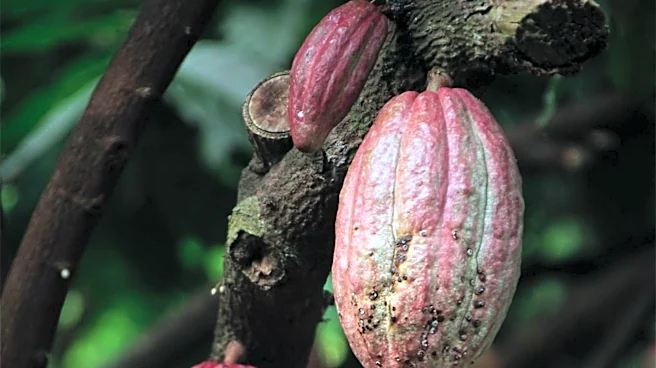
Ghana's parliament has passed a new bill imposing severe penalties on cocoa farmers who convert their farms to other uses without government approval. The legislation, which awaits the president's signature, grants protected status to all cocoa farms,
making unauthorized repurposing a criminal offense. The law includes penalties of up to 20 years in prison for illegal gold mining on cocoa farms. The measure has drawn criticism from farmers who argue that they receive insufficient government support despite investing heavily in their farms.
Why It's Important?
Cocoa farming is a critical economic activity in Ghana, contributing significantly to the country's export revenue. The new law aims to preserve cocoa production by preventing land conversion, which could threaten the industry's sustainability. However, the legislation's stringent penalties may exacerbate tensions between farmers and the government, particularly if farmers feel inadequately supported. The law highlights the challenges of balancing economic development with environmental conservation and the need for policies that address the concerns of all stakeholders.
What's Next?
The implementation of the new law will require careful monitoring to ensure compliance and address any unintended consequences. The government may need to engage with farmers to provide additional support and resources, such as financial assistance or technical guidance, to help them maintain their cocoa farms. The law's impact on the cocoa industry and rural communities will be closely watched, as it could influence future agricultural policies and land use regulations in Ghana and other cocoa-producing countries.