




What's Happening?
The Missouri Supreme Court has unanimously blocked new congressional districts, which were backed by President Trump, from being used in the upcoming November election. The court has ordered a statewide vote to determine whether to uphold or reject the new map.
This decision marks a significant setback for Republicans in the national redistricting battle, as they had aimed to gain an additional seat and maintain their slim House majority. The new districts had been utilized in the August primaries, but the state Supreme Court ruled they cannot be used in the general election or in the future unless approved by voters. The court found that a referendum petition challenging the map was legal, sufficient, and timely, overturning a lower court's decision and the Secretary of State Denny Hoskins' rejection of the petition. Consequently, the congressional map adopted after the 2020 census will remain in effect for the November 2026 general election.
Why It's Important?
This ruling carries substantial implications for the balance of power in the U.S. House of Representatives and the ongoing debate surrounding gerrymandering. By blocking the Trump-backed map, the Missouri Supreme Court has thwarted Republican efforts to secure an additional congressional seat, potentially impacting the party's ability to retain its House majority. The decision also reinforces the power of citizen referendums in challenging legislative actions, particularly in matters of electoral district mapping. Attorney General Catherine Hanaway's immediate appeal to the U.S. Supreme Court underscores the high stakes involved, framing the decision as a 'constitutional crisis.' The outcome of this legal challenge could set a precedent for how states handle redistricting and the role of voter initiatives in shaping electoral boundaries, affecting fair representation and political influence across the nation.
What's Next?
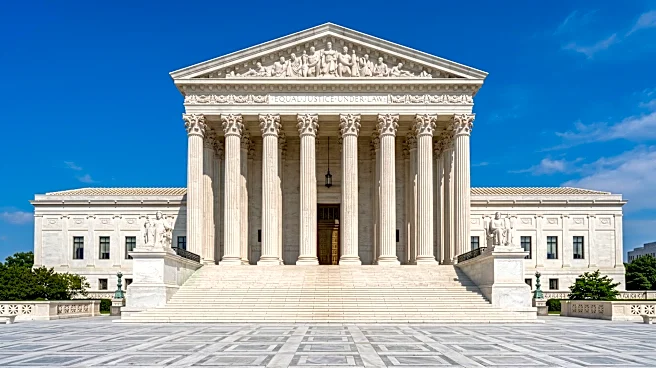
Missouri Attorney General Catherine Hanaway has announced an immediate appeal to the U.S. Supreme Court, asserting that the state has been thrust into a 'full-fledged constitutional crisis.' The U.S. Supreme Court will now consider whether to hear the appeal and potentially overturn the Missouri Supreme Court's decision. If the U.S. Supreme Court declines to intervene or upholds the state court's ruling, Missouri voters will have the final say on the congressional map through a statewide referendum. This means the map adopted after the 2020 census will be used for the November 2026 general election. Additionally, the Missouri Supreme Court also ordered that a separate ballot proposal, making it difficult for politicians to change voter-enacted measures, be placed on the November ballot, indicating further direct voter engagement in legislative processes.
Beyond the Headlines
The Missouri Supreme Court's decision highlights the intricate and often contentious interplay between state judicial systems, legislative bodies, and voter initiatives in shaping democratic processes. The ruling's emphasis on the legality and timeliness of the referendum petition underscores a broader trend of increased citizen engagement and challenges to partisan gerrymandering. This case could serve as a significant precedent, empowering citizens in other states to utilize similar mechanisms to contest congressional maps they deem unfair. The legal battle also brings to the forefront the ethical considerations of political maneuvering in redistricting, where the goal of securing partisan advantage can clash with principles of fair representation and democratic integrity. The long-term implications could include a re-evaluation of the scope of referendums in federal election matters and a renewed focus on bipartisan solutions for drawing electoral boundaries.