
What's Happening?
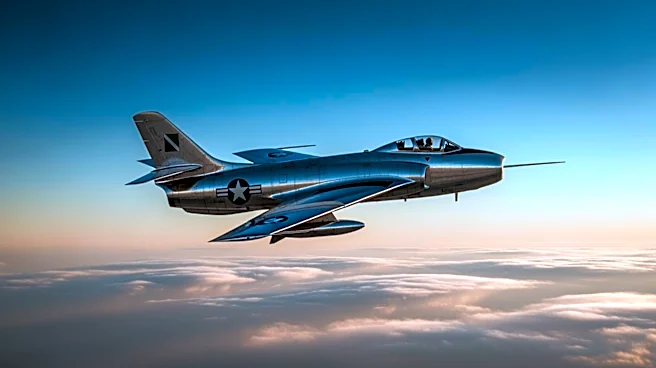
Seventy-five years ago, during the Korean War, Captain James Jabara from Wichita became the first American to achieve the status of a jet ace. On this day in 1951, Jabara, piloting an F-86 Sabre, shot
down two Soviet-built MiG-15s, marking his fifth and sixth aerial victories. This achievement made him the first pilot in history to become a flying ace using jet aircraft. The term 'flying ace' refers to a military pilot who has achieved five or more confirmed aerial combat kills, a standard that originated during World War I. On the day of his historic achievement, Jabara was part of a mission over MiG Alley in northwestern North Korea. Despite a malfunction with his aircraft's fuel tank, which should have forced him to return to base, Jabara continued the mission and successfully engaged enemy aircraft. His actions during the 20-minute battle earned him the Distinguished Service Cross, the second-highest military decoration in the United States.
Why It's Important?
Captain Jabara's accomplishment during the Korean War is a significant milestone in military aviation history. His success as the first jet ace demonstrated the strategic importance of air superiority in modern warfare. Jabara's actions not only boosted the morale of U.S. forces but also underscored the effectiveness of jet technology in combat. This achievement highlighted the evolving nature of aerial combat and the critical role of advanced aircraft in achieving military objectives. Jabara's legacy continues to inspire future generations of pilots and serves as a testament to the bravery and skill required in aerial warfare. His story is a reminder of the technological advancements and strategic innovations that have shaped military tactics and capabilities over the decades.
What's Next?
As the 75th anniversary of Jabara's achievement is commemorated, it serves as an opportunity to reflect on the advancements in military aviation since the Korean War. The U.S. Air Force and other military institutions may use this milestone to honor past achievements while also focusing on future developments in aerial combat technology. The legacy of pilots like Jabara continues to influence training and strategic planning within the military, ensuring that the lessons learned from past conflicts are applied to future challenges. Commemorative events and educational programs may be organized to celebrate Jabara's contributions and to educate the public about the history and evolution of air combat.
Beyond the Headlines
Jabara's story also raises important discussions about the ethical and strategic implications of air warfare. The use of advanced technology in combat poses questions about the balance between human skill and machine capabilities. As military technology continues to evolve, the role of pilots and the ethical considerations of automated and remote-controlled warfare become increasingly relevant. Jabara's legacy prompts reflection on the human element in military operations and the ongoing need to balance technological advancements with ethical considerations in warfare.