



What's Happening?
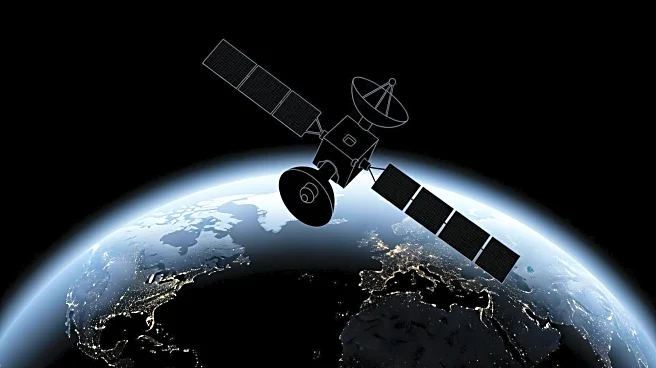
The United States has declassified a Cold War-era spy satellite program known as JUMPSEAT, which operated from 1971 to 1987. This series of eavesdropping satellites was part of an Air Force initiative called Project EARPOP. The satellites were designed
to collect electronic signals, such as radar emissions, from the Soviet Union and its allies. Unlike earlier surveillance satellites, JUMPSEAT operated in a Molniya orbit, allowing prolonged observation of high northern latitudes, including Soviet territory. The National Reconnaissance Office (NRO) has stated that the program met its expectations and that its declassification will not compromise current or future space programs, although some aspects of the mission remain classified.
Why It's Important?
The declassification of the JUMPSEAT program highlights the extensive measures taken by the US during the Cold War to gather intelligence on the Soviet Union. This revelation provides insight into the technological advancements and strategic efforts employed in intelligence gathering during that era. The disclosure may also influence current discussions on transparency and the balance between national security and public knowledge. Additionally, it underscores the ongoing evolution of US reconnaissance capabilities, as the NRO continues to develop new satellite technologies to address modern threats, including anti-satellite measures.