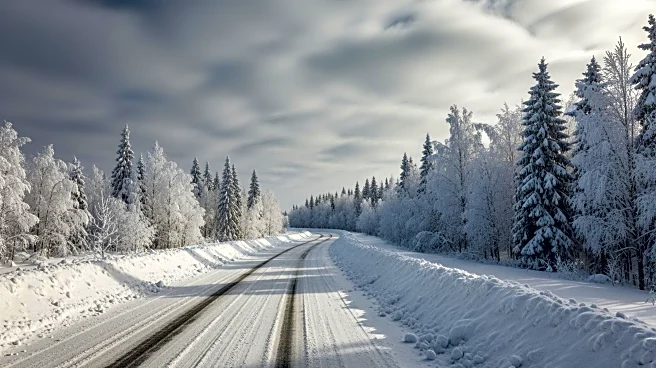




What's Happening?
A severe winter storm is impacting a large portion of the United States, leading to the cancellation of nearly 12,000 flights and affecting over 140 million people under winter storm warnings. The storm is bringing heavy snow and ice from east Texas to North
Carolina, with significant ice accumulation reported in parts of Oklahoma, Texas, and Louisiana. The National Weather Service has warned that the storm could cause damage comparable to a hurricane, particularly in areas heavily affected by ice. Power outages have been reported across several states, with Texas, Louisiana, and New Mexico experiencing significant disruptions. Governors in more than a dozen states have declared emergencies or advised residents to stay home to avoid dangerous travel conditions.
Why It's Important?
The storm's impact is significant due to its potential to disrupt daily life and infrastructure across a vast area of the U.S. The cancellation of flights affects travel plans and logistics, while power outages pose a risk to residents' safety and comfort, especially in regions where homes are primarily heated by electricity. The storm's severity highlights vulnerabilities in infrastructure, particularly in areas prone to ice accumulation. The economic impact could be substantial, with businesses and schools closing, and emergency services stretched thin. The storm also underscores the importance of preparedness and resilience in the face of extreme weather events, which are becoming more frequent and severe.
What's Next?
As the storm moves northeast, it is expected to bring significant snowfall to major cities like Washington, New York, and Boston. Emergency services and utility companies are mobilizing resources to restore power and clear roads, but recovery efforts may be hampered by the persistent cold temperatures and ice. Residents are advised to remain indoors and avoid travel until conditions improve. The federal government, through FEMA, is coordinating with state and local officials to provide assistance, and emergency declarations have been requested by several states to unlock federal resources. The aftermath of the storm will likely involve extensive cleanup and repair efforts, particularly in areas hardest hit by ice.







![Cortisol vs. Melatonin: The Biological War Happening Inside Every Night-Shift Worker]](https://glance-mob.glance-cdn.com/public/cardpress/binge-magazine-card-generation/spaces/US/en/discover-daily/images/ppid_7byehtbd-image-177082393426031154.webp)