






What's Happening?
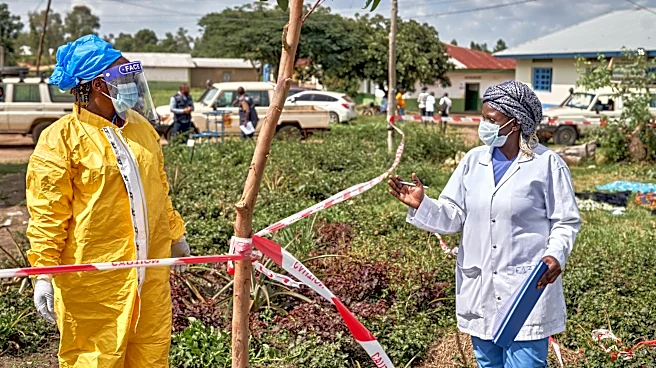
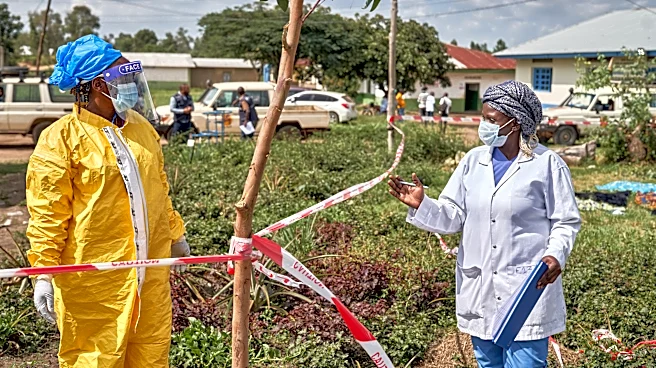
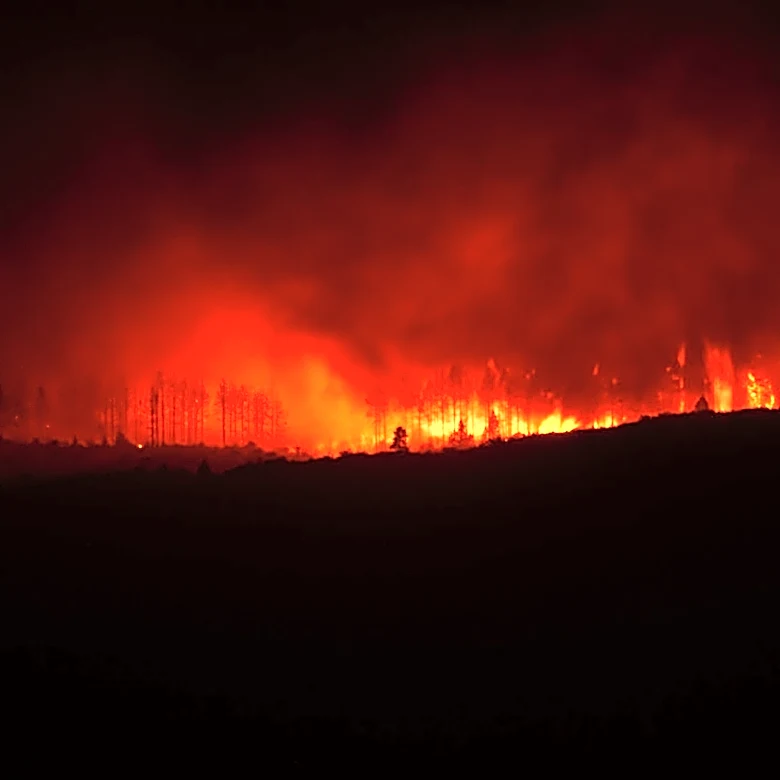
In eastern Congo, residents set fire to an Ebola treatment center in Rwampara after being prevented from retrieving the body of a local man suspected to have died from Ebola. The incident reflects the challenges faced by health workers in curbing the Ebola outbreak,
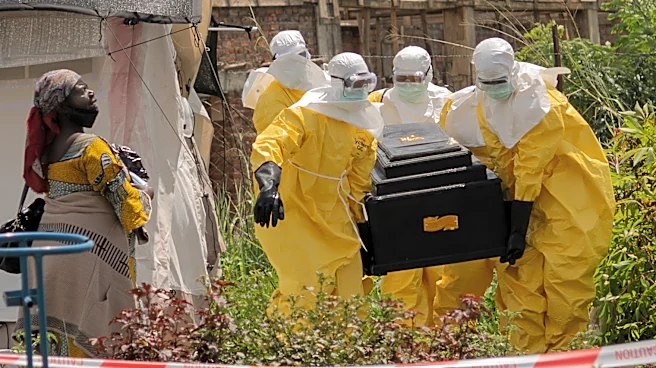
as stringent measures clash with local customs, such as burial rites. The outbreak has been spreading in a region with limited health facilities and ongoing armed conflict. The arson attack was carried out by local youths who were frustrated by the authorities' protocols for burying suspected Ebola victims, which require bodies to be buried according to specific regulations to prevent further spread of the virus.
Why It's Important?
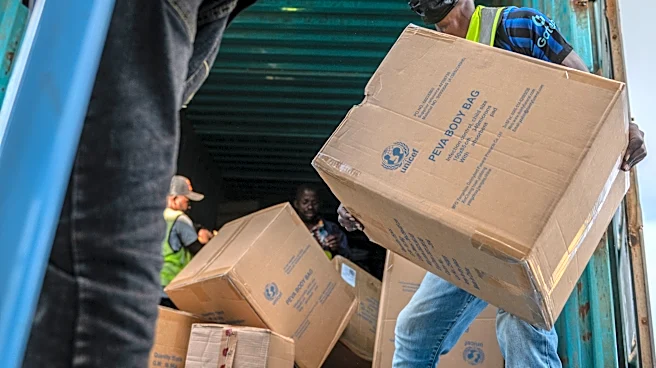
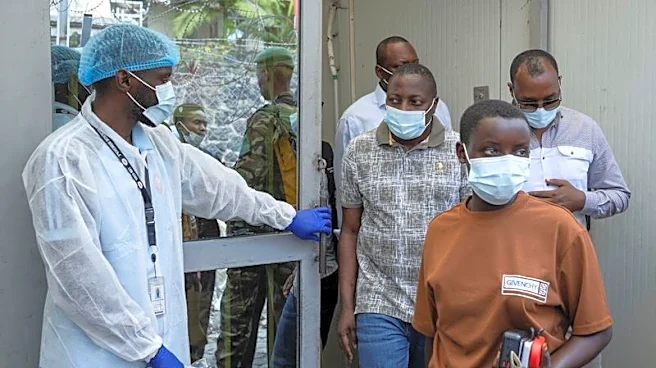
The incident underscores the difficulties in managing health crises in regions with cultural practices that conflict with medical protocols. The outbreak has been declared a public health emergency of international concern by the World Health Organization (WHO), with 148 suspected deaths and nearly 600 suspected cases. The risk of regional spread is high, particularly with the proximity to Uganda and South Sudan. The situation highlights the need for more supplies and staff to respond effectively, as well as the urgency in developing a vaccine for the Bundibugyo strain responsible for the outbreak. The international community is affected, with events like the India-Africa Forum Summit postponed due to the health situation.
What's Next?
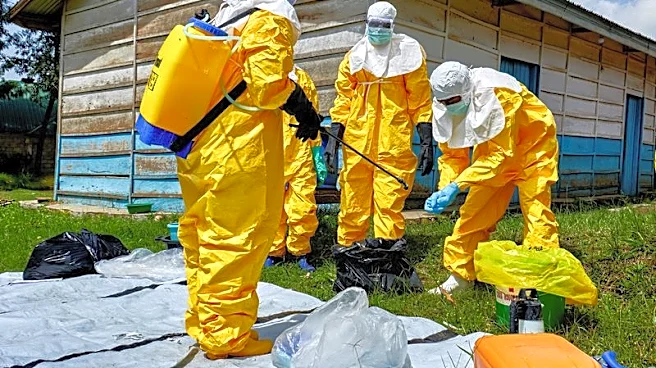
Efforts to contain the outbreak will continue, with health workers and aid groups seeking additional resources. The WHO emphasizes the importance of acting quickly and working closely with communities, as the coming days are critical. Investigations into the source of the outbreak are ongoing, and health officials are yet to identify 'patient zero.' The U.S. has implemented travel restrictions and enhanced screening for travelers from affected regions. The situation remains fluid, with potential for further international repercussions as the outbreak evolves.
Beyond the Headlines
The cultural clash between local burial customs and medical protocols highlights the broader issue of integrating traditional practices with modern health interventions. The outbreak's impact on international events and travel restrictions illustrates the interconnectedness of global health and security. The need for a vaccine and effective treatment options for the Bundibugyo strain points to the ongoing challenges in addressing emerging infectious diseases.