



What's Happening?
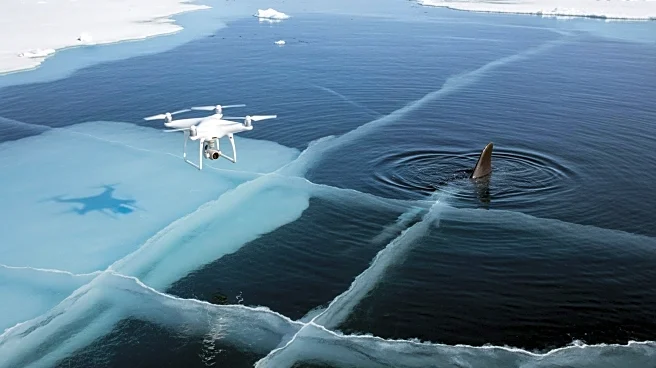
Researchers have successfully used drones to collect samples from the exhaled breath of whales in northern Norway, marking a significant advancement in non-invasive health monitoring of marine life. This method has led to the first confirmation of cetacean
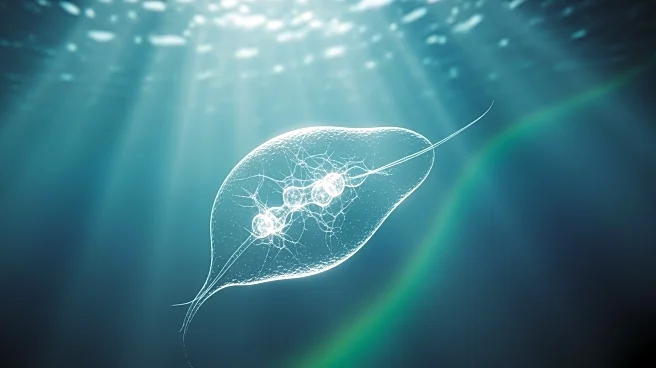
morbillivirus circulating above the Arctic Circle. The study, involving institutions such as King's College London and Nord University, utilized drones equipped with sterile Petri dishes to capture respiratory droplets from humpback, sperm, and fin whales. The findings, published in BMC Veterinary Research, indicate the presence of cetacean morbillivirus, a highly pathogenic virus known to cause severe respiratory, neurological, and immune damage in whales, dolphins, and porpoises. This virus has been linked to mass mortality events in cetacean populations globally since its discovery in 1987.
Why It's Important?
The discovery of cetacean morbillivirus in Arctic whale populations is significant as it highlights the potential for widespread disease outbreaks in these regions, which could have devastating effects on marine biodiversity. The use of drones for pathogen screening represents a breakthrough in wildlife conservation, allowing for the monitoring of diseases without causing stress or harm to the animals. This method provides critical insights into the health of whale populations in rapidly changing Arctic ecosystems, where climate change and human activities are increasing. The presence of such a virus poses a risk not only to marine life but also to the broader ecological balance, as whales play a crucial role in ocean health and nutrient cycling.
What's Next?
The study underscores the need for continued surveillance of whale health using drone technology to monitor emerging pathogens. Researchers emphasize the importance of long-term monitoring to understand how multiple stressors, including climate change and human interactions, will impact whale health in the future. Conservation strategies may need to be adapted to address these new threats, ensuring the protection of vulnerable marine species. The findings also call for increased international collaboration in monitoring and mitigating the spread of infectious diseases in marine environments.