




What's Happening?
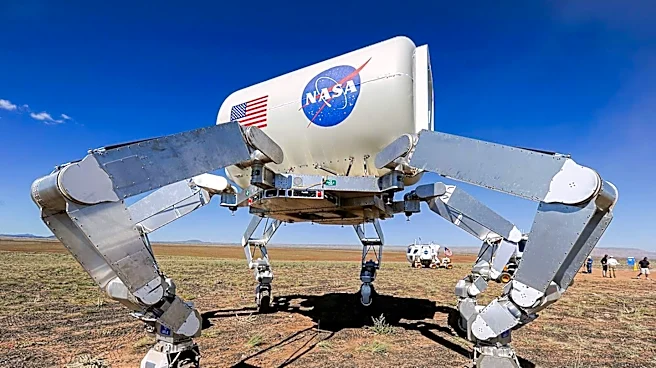
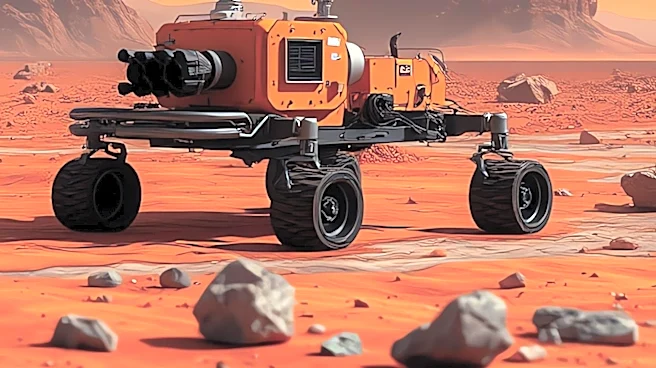
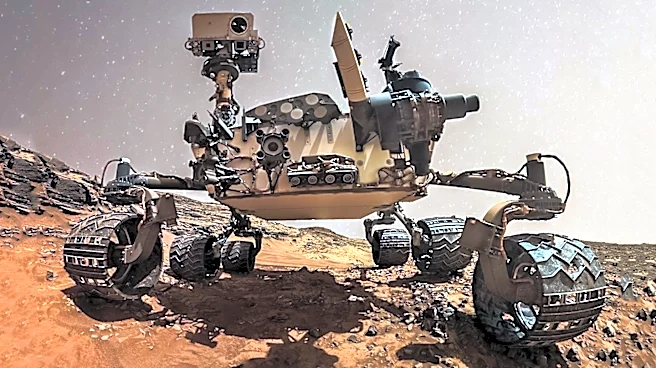
NASA is conducting advanced testing of its new rover, ERNEST, in the California desert. Designed for both Mars and Moon exploration, ERNEST stands for Exploration Rover for Navigating Extreme Sloped Terrain. The rover recently completed a 16-mile test run
in the Colorado Desert, demonstrating its autonomous capabilities with minimal intervention from engineers. ERNEST is faster than current Mars rovers and features a unique design with four wheels, allowing it to navigate challenging terrains. The rover's development began in 2022, and it has undergone extensive virtual testing before moving to real-world trials.
Why It's Important?
ERNEST represents a significant advancement in rover technology, with potential applications for future lunar and Martian missions. Its ability to traverse extreme terrains autonomously could enhance scientific exploration and data collection on these celestial bodies. The development of ERNEST aligns with NASA's goals for long-range exploration and could contribute to the success of future missions. This testing phase is crucial for refining the rover's capabilities and ensuring its readiness for space deployment, potentially leading to groundbreaking discoveries on the Moon and Mars.
What's Next?
NASA will continue testing ERNEST to refine its mobility and autonomy systems. The rover's successful deployment could pave the way for more ambitious exploration missions, including long-distance scientific expeditions on the Moon and Mars. As ERNEST progresses towards space readiness, it may become a key asset in NASA's exploration strategy, supporting the agency's objectives for lunar and Martian exploration. The ongoing development and testing will also provide valuable insights for future rover designs and mission planning.