







What's Happening?
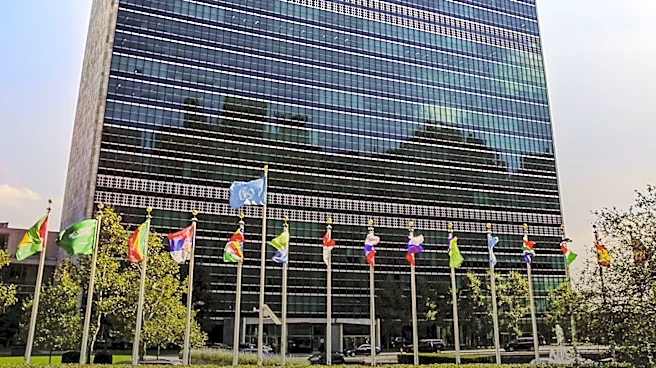
India has significantly escalated its demand for reforms within the United Nations Security Council, asserting that the Council has not fulfilled its fundamental responsibilities concerning global peace and security. During the latest round of negotiations,
India’s Deputy Permanent Representative Yojna Patel emphasized that any meaningful reform must include an expansion of permanent membership. Patel warned that without this crucial change, the reform process would remain incomplete and ineffective. She explicitly rejected the proposal for a third category of 'Fixed Regional Seats,' characterizing it as a tactic designed to delay and ultimately derail genuine reform efforts. This proposal, put forth by the 'Uniting for Consensus' group, which includes Italy and Pakistan, is viewed by India as a substitute for expanding permanent membership. India, along with the Group of 4 (G4) — comprising Germany, Brazil, and Japan — advocates for a structural expansion that reflects current geopolitical realities, mutually supporting each other for permanent seats.
Why It's Important?
India's intensified call for UN Security Council reform highlights a growing frustration among emerging global powers regarding the Council's current structure and perceived ineffectiveness. The existing composition of the Security Council, largely unchanged since its inception, is increasingly seen as outdated and unrepresentative of the 21st-century geopolitical landscape. An expansion of permanent membership, as advocated by India and the G4, would grant greater influence to nations that have significantly grown in economic and political stature, potentially leading to more inclusive and globally representative decision-making on critical peace and security issues. Conversely, the resistance from groups like 'Uniting for Consensus' underscores the deep-seated divisions and national interests at play, where some member states fear a dilution of their own influence or the empowerment of rival nations. The outcome of this reform debate could redefine global power dynamics and the efficacy of the UN in addressing future international crises.
What's Next?
The debate over UN Security Council reform is expected to continue with ongoing negotiations, as India and the G4 push for decisive structural changes. The rejection of the 'Fixed Regional Seats' proposal by India indicates a firm stance against incremental or symbolic adjustments, suggesting that future discussions will likely remain focused on the expansion of permanent membership. Member States will need to reconcile differing visions for the Council's future, balancing the demands of emerging powers with the interests of existing permanent members and those opposed to expansion. The Secretary-General's review report on UN peace operations, which recommends enhancing agility and adaptability, may also influence the broader reform agenda. The upcoming UN80 reform initiative, focusing on developing new metrics and a post-2030 sustainable development agenda, will provide another platform for these discussions, potentially leading to renewed efforts to achieve a more representative and effective Security Council.
Beyond the Headlines
The push for UN Security Council reform extends beyond mere procedural changes; it reflects a fundamental challenge to the post-World War II international order. The current structure, with its five permanent members holding veto power, often leads to stalemates and an inability to act decisively on critical global issues, as highlighted by India's assertion that the Council has failed its core responsibilities. A successful reform, particularly the expansion of permanent membership, could legitimize the Council in the eyes of a broader international community, fostering greater cooperation and collective action. However, failure to achieve meaningful reform risks further eroding the UN's credibility and relevance, potentially leading to a more fragmented and less cooperative global governance landscape. The ethical dimension of representation and fairness, alongside the practical implications for international peace and security, are at the heart of this ongoing struggle for a more equitable and effective multilateral system.