
What's Happening?
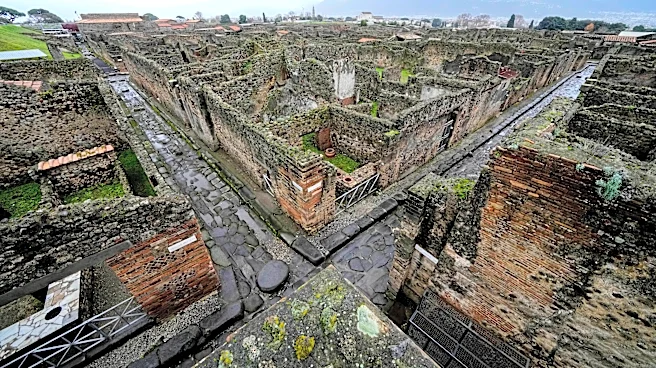
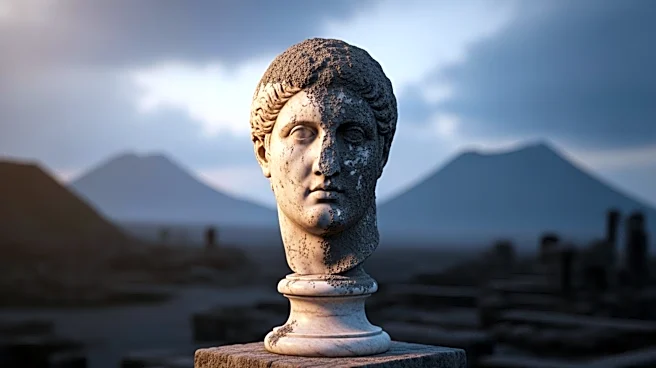
Archaeologists at the ancient site of Pompeii have utilized artificial intelligence to digitally reconstruct the face of a man who perished during the AD 79 eruption of Mount Vesuvius. This groundbreaking
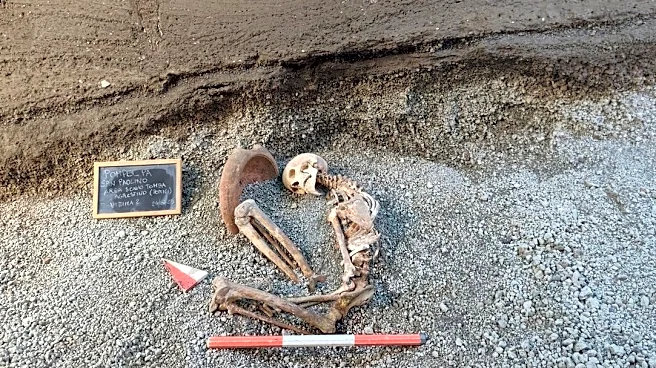
project, conducted by the Pompeii Archaeological Park in collaboration with the University of Padua, marks the first use of AI in such a context. The digital reconstruction is based on archaeological data from excavations near the Porta Stabia necropolis. The man, found with personal items like a terracotta mortar and an oil lamp, is believed to have died early in the disaster while attempting to flee. The AI-generated image aims to provide a realistic portrayal of the individual, offering new insights into the historical event.
Why It's Important?
This innovative use of AI in archaeology represents a significant advancement in the field, allowing for more detailed and accessible reconstructions of historical events. By providing a visual representation of individuals from the past, the project enhances public engagement and understanding of Pompeii's history. The reconstruction also underscores the potential of AI to revolutionize classical studies, offering new methods for analyzing and interpreting archaeological data. This development could lead to broader applications of AI in historical research, potentially transforming how we study and preserve cultural heritage.
Beyond the Headlines
The integration of AI in archaeological research raises important ethical and methodological questions. While AI offers powerful tools for reconstruction, it also necessitates careful consideration of accuracy and representation. The project highlights the balance between scientific rigor and public engagement, as researchers strive to create compelling narratives without compromising historical integrity. Additionally, the use of AI in this context may prompt discussions about the role of technology in preserving and interpreting cultural heritage, influencing future research directions and funding priorities.