






What's Happening?
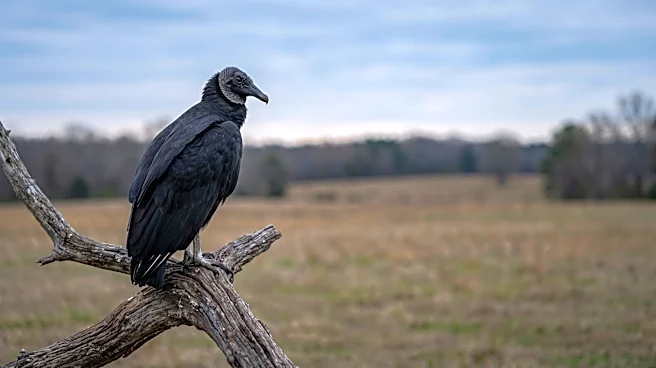
A recent study by University of Georgia (UGA) researchers has found that over 84% of dead black vultures examined tested positive for highly pathogenic avian influenza (H5N1). The study, published in Nature’s Scientific Reports, indicates that black vultures'
scavenging habits are sustaining the transmission of the virus beyond the typical bird flu season. Dr. Nicole Nemeth, lead author and head of UGA’s Southeastern Cooperative Wildlife Disease Study’s research and diagnostic service, noted that the continuous cycle of disease within the vulture population is concerning. Researchers tested 134 dead black vultures from seven states in 2022 and 2023. The findings suggest that the actual impact of the virus on the species is likely much higher than currently known, potentially affecting hundreds of thousands of black vultures. This sustained transmission increases the opportunities for the virus to mutate, posing a potential threat to other species, including humans.
Why It's Important?
The widespread H5N1 infection among black vultures carries significant ecological and public health implications. Black vultures are crucial for ecosystem health, as their scavenging helps remove carcasses and prevent the spread of diseases. A decline in their population could lead to an increase in dead animals in the landscape, potentially contributing to more diseases in people, wildlife, and domestic animals. The continuous circulation and mutation of diverse avian influenza viruses, as highlighted by co-author Rebecca Poulson, an assistant professor of wildlife diseases and virology, could be devastating to various animal populations. While there is no current evidence of the virus mutating to spread from human to human, the sustained transmission among vultures raises concerns about its potential to become more virulent and pose a greater threat to other species, including humans. The study also notes that while some vultures survive infection and develop antibodies, endangered species like the California condor are highly vulnerable, with a 2023 outbreak killing at least 20 birds out of a population of fewer than 600.
What's Next?
The ongoing year-round cycle of H5N1 transmission among black vultures suggests a need for continued surveillance and research into the virus's evolution. The potential for the virus to mutate into more virulent forms or to jump to other species, including humans, remains a significant concern. Researchers will likely continue to monitor black vulture populations and other wildlife for signs of H5N1 infection and mutation. The study's findings underscore the importance of understanding the role of scavengers in disease ecology and developing strategies to mitigate the spread of avian influenza. Public health officials and agricultural agencies may need to consider these findings when developing preparedness and response plans for future outbreaks, especially given the virus's ability to infect various animals, from dairy cows to marine mammals.
Beyond the Headlines
The study reveals a deeper ecological challenge where the natural behavior of a species, such as scavenging, inadvertently contributes to the perpetuation of a dangerous virus. This highlights the complex interplay between wildlife, disease, and environmental health. The fact that black vultures consume infected carcasses, while efficient for their survival, creates a continuous reservoir for H5N1, making eradication or control particularly difficult. This situation also brings to light the ethical dilemma between animal welfare and disease control, as some farmers' associations in other regions have argued that enclosed cage systems for poultry could reduce contact with wild birds and pathogens, contrasting with animal welfare groups advocating for phasing out cages. The broader implication is the constant threat of zoonotic diseases emerging from wildlife populations, necessitating a 'One Health' approach that integrates human, animal, and environmental health considerations to address such complex public health challenges effectively.