
What's Happening?
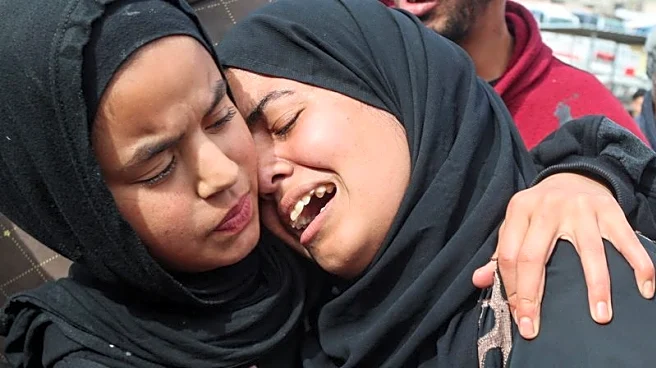
Rimas Abu Lehia, a 15-year-old Palestinian girl from Gaza, is among over 20,000 Palestinians awaiting medical evacuation for treatment of war injuries and chronic conditions. Her knee was shattered by a bullet when Israeli troops fired at a crowd near
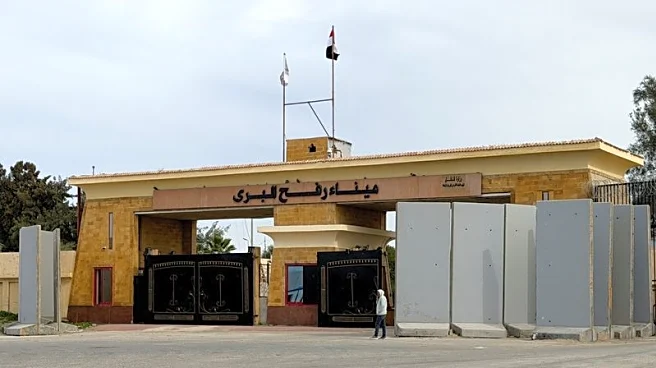
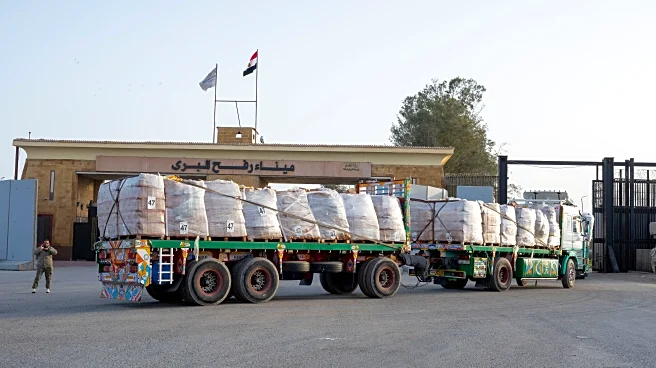
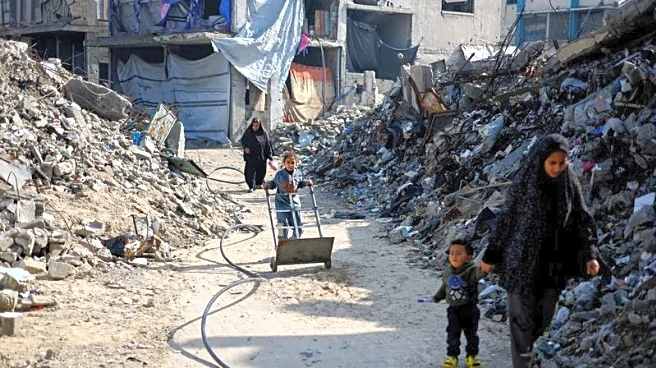
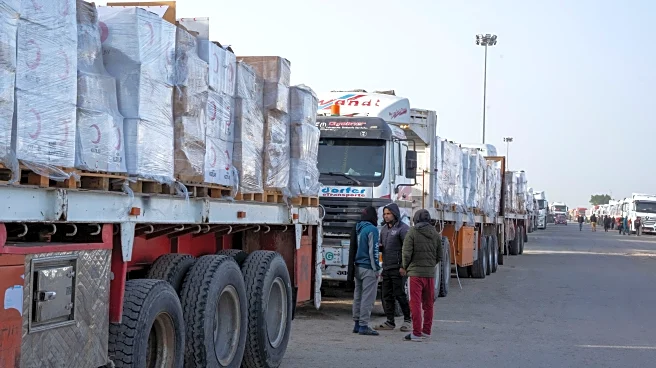
an aid truck. The Rafah border crossing between Gaza and Egypt, crucial for medical evacuations, is set to reopen under a ceasefire agreement between Israel and Hamas. Israel has announced limited movement, allowing 50 patients a day to leave, a significant increase from the previous 25 patients a week. However, with over 4,500 children and many others in urgent need, it could take up to 400 days to evacuate all patients. Gaza's health sector is severely strained, with hospitals unable to perform complex surgeries or treat chronic conditions due to shortages and restrictions.
Why It's Important?
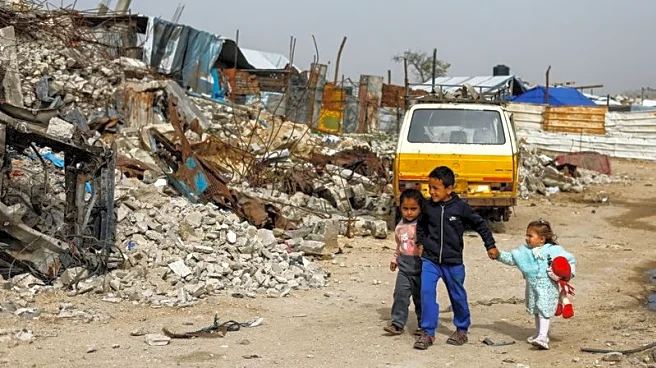
The reopening of the Rafah border crossing is critical for Gaza's healthcare crisis, as local hospitals are overwhelmed and lack resources to treat severe cases. The situation highlights the humanitarian impact of the ongoing conflict and the challenges faced by Palestinians in accessing necessary medical care. The limited capacity for evacuations underscores the dire need for international intervention and support. The health crisis in Gaza not only affects the immediate well-being of thousands but also poses long-term implications for the region's stability and humanitarian conditions. The international community's response to this crisis could influence future diplomatic relations and peace efforts in the region.
What's Next?
The reopening of the Rafah crossing is expected to facilitate increased medical evacuations, but the process will be slow given the high number of patients. International pressure may mount on Israel and Egypt to expedite the process and increase the number of daily evacuations. Human rights groups are likely to continue advocating for the removal of restrictions on medical evacuations to the West Bank and East Jerusalem. The situation may also prompt further discussions on the broader humanitarian needs in Gaza and the role of international aid in addressing these challenges.