



What's Happening?
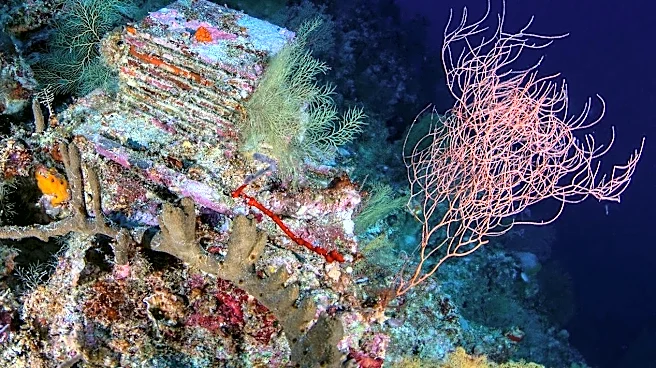
Research published in the journal Science, based on core samples from Galápagos corals, indicates that El Niño events have been significantly stronger in the past 40 years than at any other time in the last millennium. Scientists studied living and fossil
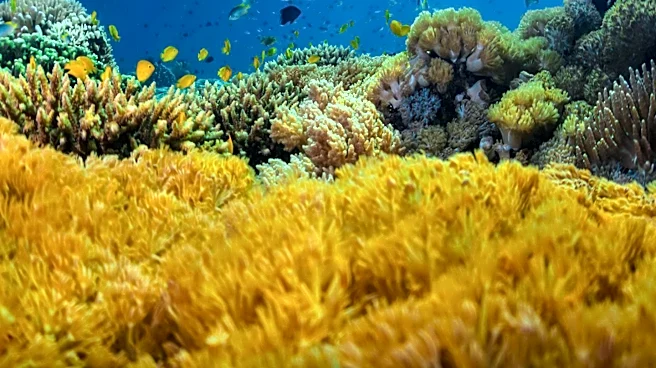
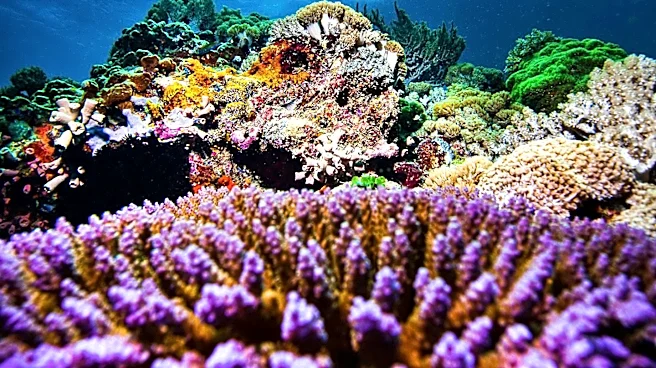
corals, some up to 4,500 years old, to reconstruct a historical record of ocean temperatures. By analyzing the chemical composition of coral skeletons, which preserve a record of local ocean temperatures, researchers found that the strength of the El Niño-Southern Oscillation (ENSO) has intensified as global temperatures have warmed. This intensification aligns with human-caused global warming, suggesting that recent powerful El Niño events, such as those in 1982-83 and 1997-98, may be indicative of more extreme events in the future. The study highlights that the 1982-83 El Niño caused a marine heatwave in the Galápagos, leading to the death of over 95% of local corals and devastating marine ecosystems by blocking the upwelling of nutrient-rich waters.
Why It's Important?
The intensification of El Niño events has profound implications for global weather patterns and economic stability. Stronger El Niños lead to more extreme climate events worldwide, including severe floods and droughts, which can cause significant economic damage and loss of life. For instance, the 1982-83 El Niño contributed to climate extremes globally, costing the economy an estimated US$4 trillion, while the 1997-98 event resulted in 23,000 deaths. The study's findings underscore the critical need for improved forecasting and preparedness strategies to mitigate the impacts of these increasingly powerful climate phenomena. Understanding the historical context provided by corals allows scientists to better assess the long-term effects of climate change on ENSO, which is crucial for developing accurate climate models and predictions. This research also emphasizes the vulnerability of unique ecosystems like the Galápagos to climate shifts, highlighting broader concerns about biodiversity loss and ecological disruption.
What's Next?
The ongoing research into El Niño and La Niña events aims to improve forecasting capabilities, with scientists currently able to predict these events up to a year in advance. This relies on continuous and meticulous climate measurements from satellites and buoys across the tropical Pacific, coupled with advancements in climate modeling and forecasting. The insights gained from studies like this one will help refine these models, enabling more accurate predictions of future climate extremes. As global warming accelerates, the ability to anticipate and prepare for stronger ENSO events becomes increasingly vital. This includes developing strategies for disaster preparedness, food security, and resource management in regions prone to El Niño-induced floods and droughts. Continued monitoring and research are essential to understand how ENSO teleconnections may change in a warming climate and to identify which climate models most accurately track observations.
Beyond the Headlines
The study's use of coral records to trace climate history offers a unique perspective on the long-term impacts of human activity on the planet's climate systems. Corals, acting as natural archives, provide data extending far beyond modern observational records, revealing that the current intensity of El Niño events is unprecedented in the last millennium. This deep historical context strengthens the link between human-caused global warming and the observed intensification of ENSO. The research also highlights the complex interplay between natural climate variability and anthropogenic climate change, suggesting that global warming is not merely shifting baseline temperatures but is also amplifying existing climate phenomena. This has ethical implications regarding intergenerational equity and the responsibility to address climate change, as future generations will face more frequent and severe climate extremes. The findings also underscore the importance of interdisciplinary research, combining marine biology, geochemistry, and climate science, to unravel complex environmental challenges.