
What's Happening?
In Oregon, hazelnut farming is experiencing significant growth despite a general decline in the state's agricultural land. Jeff Newton, vice chair of the Oregon Hazelnut Commission, and other growers are
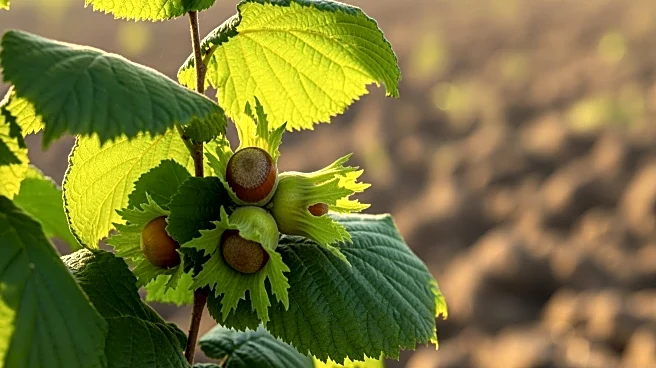
investing in new hazelnut trees, particularly in the Willamette Valley. This trend is driven by consistent low prices for other crops, making hazelnuts a more attractive option. The U.S. Department of Agriculture's data indicates a 10% decline in Oregon's farmland from 2002 to 2022, yet hazelnut acreage has increased by 180%, from 31,000 to 88,000 acres. Oregon is a leading global producer of hazelnuts, with an estimated production of 115,000 to 125,000 tons in 2025. The state's climate and the dedication of generational family farmers contribute to the high quality of Oregon hazelnuts.
Why It's Important?
The expansion of hazelnut farming in Oregon highlights a shift in agricultural priorities due to economic pressures. As other crops face declining profitability, hazelnuts offer a viable alternative, potentially stabilizing the agricultural economy in the region. This growth not only supports local farmers but also strengthens Oregon's position in the global hazelnut market. The increase in hazelnut production could lead to more job opportunities in farming and processing, benefiting the local economy. Additionally, the focus on maintaining high-quality standards ensures that Oregon remains competitive internationally, which is crucial for long-term sustainability in the agricultural sector.
What's Next?
As hazelnut production continues to rise, Oregon farmers and the Hazelnut Commission anticipate further expansion in the coming years. Christine Roth, executive director of the Oregon Hazelnut Commission, predicts that production could triple in the next six to seven years. This growth will likely require increased investment in infrastructure and processing facilities to handle the larger volumes. Farmers will need to navigate challenges such as blight and the initial investment costs associated with hazelnut trees. The success of this expansion will depend on maintaining quality and meeting global demand, which could lead to new market opportunities and partnerships.
Beyond the Headlines
The growth of hazelnut farming in Oregon reflects broader trends in agriculture where farmers are increasingly turning to niche markets to remain profitable. This shift may encourage innovation in farming practices and sustainability efforts, as growers seek to optimize production and reduce environmental impact. The close relationship between farmers and processors in Oregon could serve as a model for other agricultural sectors, emphasizing the importance of collaboration in maintaining product quality. As the industry grows, there may also be cultural implications, reinforcing the identity of hazelnuts as a key part of Oregon's agricultural heritage.