



What's Happening?
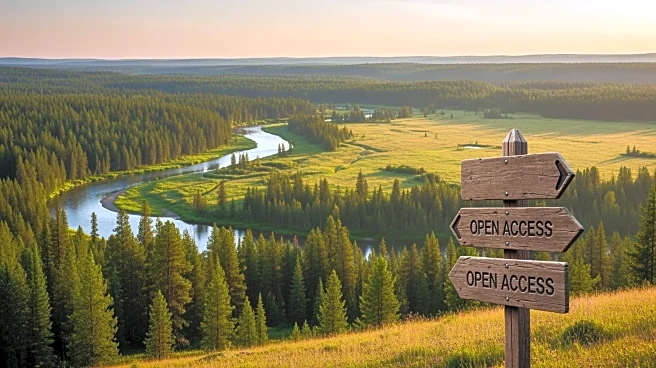
The Trump Administration has issued a new order through the Interior Department mandating that federal lands be open to hunting and fishing unless a legal exception justifies closure. This directive requires land managers to identify and remove unnecessary
barriers to these activities, expand access where feasible, and coordinate with states and tribes. The order has been welcomed by organizations supporting hunting and fishing, such as the Mule Deer Foundation and the Rocky Mountain Elk Foundation. However, it does not alter existing laws or regulations regarding where hunting and fishing are permitted, such as in national parks where hunting is currently prohibited. The directive applies to lands managed by the Bureau of Land Management, Bureau of Reclamation, National Park Service, U.S. Fish and Wildlife Service, and Bureau of Indian Affairs, contingent on tribal interest.
Why It's Important?
This policy shift underscores the administration's commitment to increasing recreational opportunities on public lands, potentially benefiting hunters and anglers by expanding access to federal lands. It reflects a broader strategy to prioritize outdoor recreation and could lead to increased economic activity in rural areas dependent on hunting and fishing tourism. However, the directive may also raise concerns among conservationists and environmental groups about the potential impacts on wildlife and ecosystems. The balance between recreational use and conservation will be a critical issue as the policy is implemented.
What's Next?
U.S. Fish and Wildlife Service Director Brian Nesvik has announced plans to review decisions affecting hunting and fishing access, aiming to open all federal wildlife refuges and hatcheries to these activities within two years, barring conflicts with legal mandates or sensitive habitats. This initiative will likely involve consultations with state and tribal authorities to ensure compliance with local regulations and conservation goals. Stakeholders, including environmental groups and local communities, may engage in discussions to address potential conflicts and ensure sustainable management of public lands.