
What's Happening?
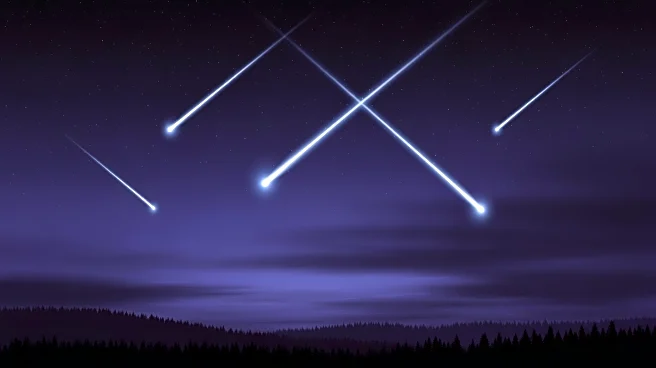
The Geminid meteor shower, one of the most anticipated celestial events of the year, is set to peak on the night of December 13-14, 2025. Known for its bright and colorful meteors, the Geminids are expected
to produce a stunning display of shooting stars. The shower, which originates from the asteroid 3200 Phaethon, is active for nearly two weeks, with peak activity expected to deliver up to 120 meteors per hour under ideal conditions. Observers are advised to find a dark location and allow their eyes to adjust to the darkness for optimal viewing.
Why It's Important?
The Geminid meteor shower is significant as it provides a unique opportunity for public engagement with astronomy. It is one of the most reliable meteor showers, offering a chance for people across the U.S. to witness a natural spectacle. This event highlights the importance of preserving dark skies and raises awareness about the impact of light pollution on astronomical observations. It also serves as an educational tool, inspiring interest in space science and potentially influencing future scientific pursuits.
What's Next?
Following the Geminid meteor shower, the Ursids meteor shower will begin on December 17, offering another opportunity for skywatchers to observe meteors. The winter solstice on December 21 will mark the shortest day of the year, followed by the first full moon of 2026, the Wolf Moon, on January 3. These upcoming celestial events continue to provide opportunities for public engagement and education in astronomy.