
What's Happening?
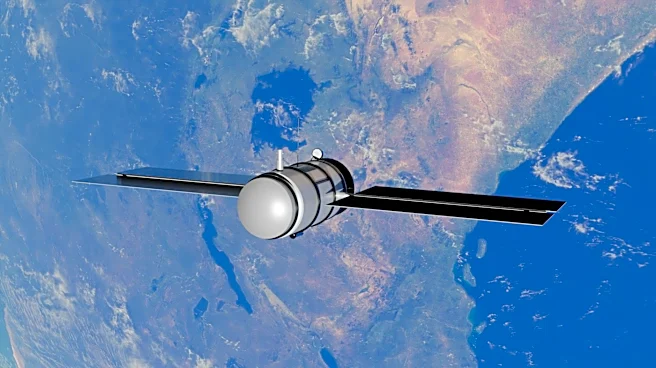
NASA has announced the release of the Cross-track Infrared Sounder (CrIS) Level 1B Version 4 data collection from the Joint Polar Satellite System 2 (JPSS-2) satellite, also known as NOAA-21. This data product,
developed by the University of Wisconsin-Madison and the Jet Propulsion Lab (JPL) Sounder Science Investigator-led Processing Systems (SIPS) group, is generated at the Goddard Earth Sciences Data and Information Services Center (GES DISC). The CrIS L1B radiance products are crucial for retrieving atmospheric and surface parameters such as temperature, water vapor, and cloud properties. The new Version 4 data supersedes the preliminary Version 3 beta product released in 2023, offering improvements in calibration, geolocation, quality monitoring, and metadata.
Why It's Important?
The release of the CrIS Level 1B Version 4 data is significant for climate monitoring and research. The enhanced data quality allows for more accurate retrievals of atmospheric conditions, which are essential for understanding climate trends and processes. This data supports evaluations of radiative transfer models and contributes to climate studies, potentially influencing policy decisions related to climate change. The improvements in data accuracy and quality monitoring can lead to better predictions and assessments of environmental changes, benefiting researchers, policymakers, and industries reliant on climate data.
What's Next?
As the data becomes available, researchers and scientists will likely begin utilizing it to refine climate models and improve weather forecasting. The transition of NASA Earth science data sites into Earthdata is ongoing, with completion expected by the end of 2026. This integration aims to streamline access to NASA's Earth science data, enhancing the ability of scientists and policymakers to address climate-related challenges. Continued advancements in satellite data collection and processing will be crucial for future climate research and environmental policy development.