






What's Happening?
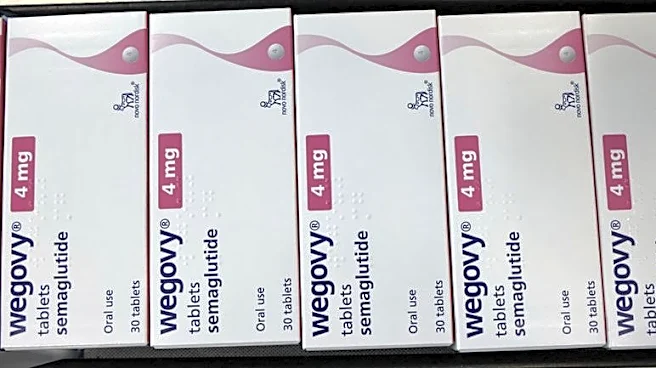
A recent study conducted by Tulane University researchers has found that semaglutide, a popular weight-loss drug belonging to the GLP-1 class of medications, may also be effective in treating lymphedema. Lymphedema is a chronic and debilitating disease
characterized by swelling, primarily in the limbs, due to an improperly draining lymphatic system. The study, published in the journal Microcirculation, revealed that semaglutide can widen vessels within the lymphatic system, thereby enhancing their ability to move larger quantities of fluid with each contraction. This research is significant as it marks the first time GLP-1 receptors have been identified in lymphatic vessels. Lymphedema affects over 250 million people globally, with secondary lymphedema, often a consequence of cancer treatment or obesity, being the most common form in the U.S. The findings suggest a potential new therapeutic avenue for a condition that currently lacks approved drug therapies.
Why It's Important?
This study holds significant importance for public health, particularly for the millions of individuals worldwide and in the U.S. who suffer from lymphedema. Currently, there are no approved drug therapies for this chronic condition, which can severely impact quality of life. The potential for semaglutide, an already approved and widely used weight-loss drug, to treat lymphedema could revolutionize patient care. If validated by ongoing clinical studies, GLP-1 receptor agonists could offer one of the first therapeutic alternatives for secondary lymphedema patients, including cancer survivors and those with obesity. Furthermore, lead study investigator Jorge A. Castorena suggests that these drugs might not only treat existing lymphedema but also reduce the risk of developing the disease if administered before or immediately after cancer interventions. This dual potential for treatment and prevention could significantly improve outcomes for a vulnerable patient population and reduce the long-term burden of the disease on healthcare systems.
What's Next?
The next crucial step involves the validation of these preclinical findings through ongoing clinical studies. Preliminary reports from one such study, led by Joseph Dayan of The Institute for Advanced Reconstruction, are already showing promising results, with a decrease in swelling of approximately 10% in a group of lymphedema patients after just three months on the lowest prescribed dosage of semaglutide. If these clinical trials continue to yield positive outcomes, it could pave the way for semaglutide, or other GLP-1 receptor agonists, to be approved as a treatment for lymphedema. Researchers will likely focus on understanding the optimal dosages, long-term efficacy, and potential side effects of using these drugs for lymphedema. Additionally, further research will explore the preventative potential of GLP-1s in patients at high risk, such as those undergoing cancer treatments. The medical community will closely monitor these developments, as successful clinical translation could lead to a paradigm shift in lymphedema management.
Beyond the Headlines
The discovery of GLP-1 receptors in lymphatic vessels and the potential therapeutic application of semaglutide for lymphedema extends beyond a single drug's utility. It highlights a deeper understanding of the intricate connections between metabolic pathways, weight regulation, and the lymphatic system. This research could open new avenues for investigating other existing medications for novel therapeutic uses, particularly in areas with unmet medical needs. Ethically, the repurposing of an established drug like semaglutide could accelerate access to treatment for lymphedema patients, bypassing some of the lengthy and costly development processes associated with entirely new drugs. Culturally, it could shift perceptions of weight-loss medications from solely aesthetic or metabolic tools to broader therapeutic agents with diverse health benefits. This interdisciplinary approach, linking obesity research with lymphatic disease, underscores the growing recognition of systemic health connections and the potential for holistic treatment strategies.