





What's Happening?
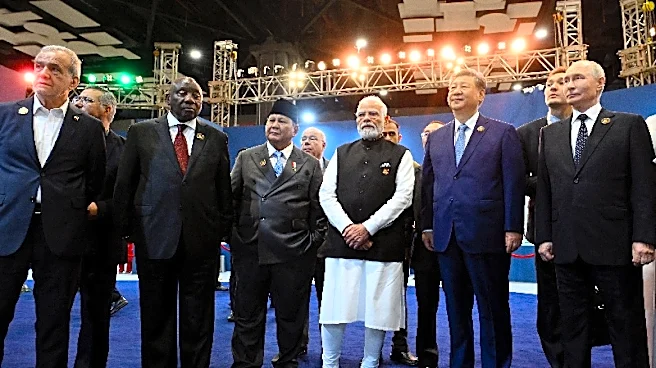
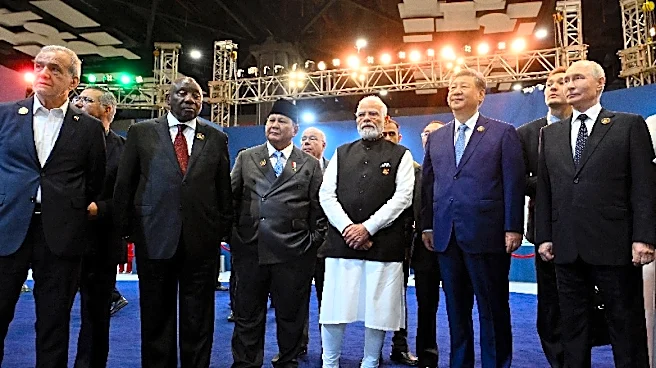
Chinese President Xi Jinping attended Session II of the 18th BRICS Summit in New Delhi, delivering a statement titled 'Cementing the Foundation for BRICS Cooperation and Bolstering the Strength of the Global South.' President Xi emphasized the accelerating
global changes and the rising influence of the Global South. He proposed five initiatives to deepen BRICS cooperation, including an open-source and inclusive AI initiative. This initiative aims to establish a BRICS AI open-source community, support cooperation in developing and applying large language models, and organize AI seminars and training courses to build an open AI ecosystem. Other initiatives include trade and investment facilitation, digital industry cooperation, intelligent manufacturing cooperation, and science and technology talent development. President Xi highlighted China's 15th Five-Year Plan as a blueprint for its development and a cooperation list for the world, affirming China's commitment to high-quality development and opening up.
Why It's Important?
President Xi's proposals at the BRICS Summit signal China's intent to lead technological and economic development within the Global South, potentially reshaping global power dynamics. The establishment of a BRICS AI open-source community could create an alternative to Western-dominated AI development, fostering technological independence among member nations and potentially setting new global standards. This move could impact U.S. technological leadership and influence, as China seeks to build a parallel ecosystem for emerging technologies. The trade and investment facilitation initiatives, such as establishing a BRICS special economic zone partnership, aim to cultivate new drivers of economic cooperation, which could divert trade and investment flows away from traditional Western partners. These initiatives collectively represent a strategic effort by China to strengthen multilateral cooperation among developing countries, enhancing their collective voice and influence in international affairs and potentially challenging existing global economic and technological frameworks.
What's Next?
The proposed initiatives by President Xi Jinping will likely lead to increased collaboration among BRICS nations in artificial intelligence, trade, and industrial development. The establishment of a BRICS AI open-source community will require significant coordination and resource allocation from member countries, with China likely playing a leading role in providing technological expertise and infrastructure. The BRICS Forum on Trade in Services, scheduled for next year, will be a key event to further develop trade and investment facilitation initiatives. These efforts could lead to the creation of new economic blocs and technological standards that operate independently of Western influence. The U.S. and its allies will be closely monitoring these developments, as they could necessitate adjustments in their own foreign policy, trade strategies, and technological partnerships to maintain global competitiveness and influence.
Beyond the Headlines
China's push for an open-source AI community within BRICS extends beyond mere technological cooperation; it represents a strategic move to establish a new paradigm for global technological governance. By promoting an open ecosystem, China aims to democratize access to advanced AI, potentially reducing the technological dependency of developing nations on Western companies. This could lead to a fragmentation of the global AI landscape, with different standards and ethical frameworks emerging from various blocs. Furthermore, these initiatives underscore China's broader vision of a multipolar world order, where the Global South plays a more prominent role. The long-term implications could include a shift in global innovation hubs, increased competition for talent and resources in emerging technologies, and a re-evaluation of intellectual property rights in an increasingly open-source environment. This also highlights the growing importance of digital sovereignty and data governance in international relations.